School and Education Facility Engineering Design
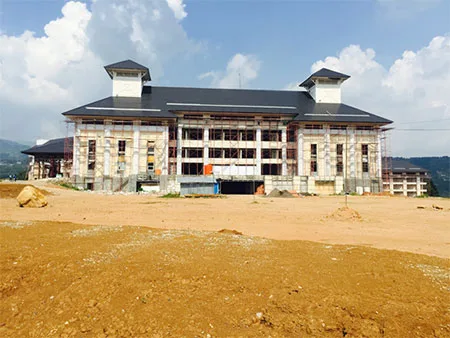
High-performance school and education facility design is an engineering approach that makes a school building cost-efficient to build, operate, and maintain, while directly supporting how well teachers teach and students learn. Alta Integra approaches every education project with three outcomes in view at once: a design that builds positive interaction between teacher and student, a design that can answer the education sector's future challenges, and genuine care for the world's shortage of adequately funded school facilities.
The Design Challenge Education Faces
Education faces a persistent set of challenges worldwide. Many children still cannot afford basic education, and many existing school buildings and education facilities fall below acceptable standards even where funding exists. At the same time, progressive education systems keep changing their teaching methods and curricula — which means the criteria used to design a school's facilities, technology, and environment need to be able to change with them, rather than lock a building into a single, static way of teaching.
What "High Performance" Means for a School
A high-performance school is a school building and set of facilities that is cost-efficient across its full lifecycle: to build, to operate, and to maintain. The design approach behind a high-performance education building focuses on building the involvement of both teacher and student in a way that supports quality educational outcomes — outcomes that, in turn, help an education institution attract quality new students and maintain the loyalty of the students and teachers it already has.
Alta Integra approaches every education project with genuine care for the progress of education itself, working to understand and solve the specific challenges and needs of each institution. That includes designing high-performance schools that respect real budget limitations, as well as designs aimed squarely at answering the future challenges facing education as a sector. The underlying design philosophy is to integrate engineering design with the practical elements of education, so the result is a facility built for continuous, long-term use rather than a fixed, one-time solution.
Engineering Services for Education Facilities
Alta Integra offers a full range of engineering consultation services for education projects, spanning the pre-design phase through to retention, and has worked with architects, technical consultants, developers, and operators across the world on education facilities of varying shapes and sizes. These services include:
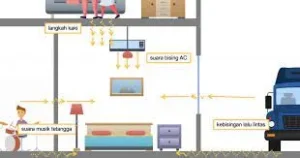
Noise control consultation, so classrooms and teaching spaces support a more productive learning process rather than competing with background or intrusive noise.
Daylighting design, to increase students' concentration and study performance through better-quality natural light.
Architectural acoustics, to raise the quality of music classrooms and any space where speech or performance intelligibility matters.
Architectural Acoustics Design and Measurement, covering both the design and the on-site verification of acoustic performance.
Noise Control Design and Measurement, applied the same way — designed, then verified in the field.
Lighting and Daylighting Design, integrated together rather than treated as separate systems.
Building Thermal Performance and Ventilation Design, for comfort and energy efficiency across Indonesia's climate.
Green Building Design and Certification, for institutions pursuing recognized sustainability credentials.
Total integration engineering design, combining all of the above disciplines into one coordinated, productive learning facility rather than a set of disconnected systems.
Project Experience
Alta Integra's education-sector project portfolio includes total integration engineering design for Canisius College in Jakarta, applying the full range of acoustic, daylighting, thermal, and integrated engineering services described above to a real, operating education institution.
Frequently Asked Questions
What does "high-performance" mean for a school building?
A high-performance school is designed to be cost-efficient to build, operate, and maintain, while actively supporting teacher-student interaction and educational outcomes rather than just meeting minimum construction standards.
Why does daylighting design matter for a school?
Good daylighting design has a direct effect on student concentration and study performance, which is why it is treated as a core engineering discipline rather than a purely aesthetic choice in education facility design.
How does acoustics affect a classroom?
Classroom acoustics affect speech intelligibility and noise intrusion, both of which directly influence how well students can hear and focus on instruction — and acoustic design is especially important for music classrooms specifically.
Can green building certification be pursued for an existing school, not just a new build?
Green building design and certification services can be applied to both new education facilities and upgrades to existing ones, depending on the institution's goals and constraints.
What is "total integration engineering design" for a school?
It is the coordination of architecture, acoustics, lighting, daylighting, thermal performance, and other engineering disciplines into a single, unified design process, rather than addressing each discipline separately — the approach used in Alta Integra's work at Canisius College, Jakarta.
Related reading: Performing Arts Hall & Auditorium Design · Acoustic Design Consultation Services · Green Building Advisory & Certification