Why Thermal Comfort Matters in Green Building Design
Thermal comfort — keeping a room's temperature, humidity, and air movement within a range the human body finds comfortable — directly affects occupant health, cognitive performance, and building energy use, which is why ALTA Integra, as green building consultant, treats it as a core criterion in green building design, not an afterthought.
What Thermal Comfort Means for a Building's Function
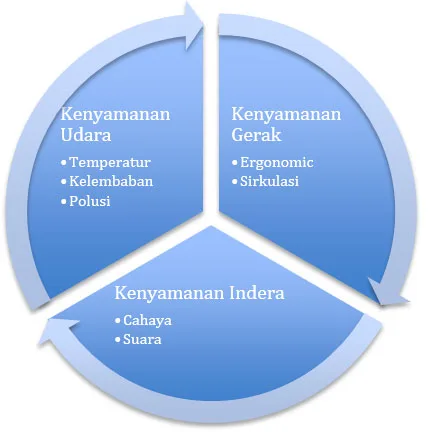
Marcus Vitruvius Pollio, writing in *De Architectura* around 15 BC, held that architecture must be supported by three basic qualities: *firmitas* (strength and endurance), *utilitas* (function), and *venusitas* (beauty). Achieving genuine functional quality in a room means meeting several categories of comfort at once: comfort of motion (ergonomics and circulation), comfort of air (temperature, humidity, air circulation, and pollution levels), and sensory comfort for the eyes and ears (lighting and acoustics). Thermal comfort sits inside that second category, and it interacts with almost everything else a building is meant to do.
Room Function and Thermal Comfort
A room in a building generally serves three functions: a protective function (shelter from the elements), a container function (supporting activities like work, study, exercise, entertainment, gathering, and rest), and a social and cultural function (Mark & Morris, 1980). Thermal comfort touches all three. As shelter, a room must protect its occupants from weather extremes severe enough to cause illness or worse. As a container for activity, a room needs thermal conditions suited to whatever is happening inside it, so that activity can proceed without the body having to fight its environment.
Thermal Comfort, Health, and Productivity
Research over several decades has linked thermal comfort directly to human health and performance. Fanger (1982) found that intellectual, physical, and sensory performance all reach their best levels when a person is in thermally comfortable conditions — meaning tasks like concentrated study, focused work, and creative output all benefit from a comfortable thermal environment, and physical activity and sensory experiences (a house of worship, a concert hall, a cinema) depend on appropriate thermal conditions to function as intended.
Altman and Stokol (1987) found that repetitive factory and office work tends to decline in productivity when performed in rooms with high temperature and humidity. Despite this documented link, building owners often try to cut costs by under-investing in thermal comfort. Edward (1989), however, argued that the investment and operating cost required to achieve thermal comfort is far cheaper than the cost of the productivity lost through employee time and business disruption.
The health stakes can be serious. Evan and Cohen (1987) noted that when the human body's core temperature exceeds 37°C, the risk of stroke or heat exhaustion rises, with extreme cases proving fatal. Room temperatures above 40°C can raise body temperature and heart rate, increasing stroke risk, and prolonged heat exposure can also cause dehydration and fatigue.
Design Strategies to Achieve Thermal Comfort
Thermal comfort can be reached through a combination of natural and mechanical design strategies.
Natural design strategies reduce energy demand while improving comfort, and include:
1. Building orientation
2. Shelter and shading
3. Natural ventilation
4. Humidity control or air drying
5. Type of construction
6. Thermal properties of the building envelope
Mechanical design strategies supplement natural strategies where they fall short, and include drying or dampening the air, and heating or cooling.
In Indonesia, two national standards give designers a concrete benchmark to design against: SNI 03-6572-2001 (ventilation and air-conditioning system design) and SNI 14-1993-03 (thermal comfort for building design), which together define a comfort band of roughly 20.8–27.1°C effective temperature for indoor spaces. Designing toward this band is a practical way to translate the general principle of "thermal comfort" into a measurable target.
Thermal Comfort and the Green Building Movement
Green building design as a concept took shape from around 1960, amid growing global concern over the depletion of fossil energy. Rachel Carson's 1962 book *Silent Spring* is widely credited as one of the works that helped initiate the green building design movement. Research by Clement and Croome later demonstrated a measurable correlation between the level of thermal comfort a building achieves and its investment cost — meaning a green building designer has to balance long-term investment against building performance to achieve the best return on investment, not simply minimize upfront spend.
Today, that balance is formalized through certification schemes such as Greenship (administered by GBCI, the Green Building Council Indonesia), EDGE, and BGH (Bangunan Gedung Hijau) — all of which assess thermal comfort and energy performance as part of certifying a building as genuinely green.
Alta Integra is a technical consulting firm specializing in natural thermal comfort and green building design. Organizations experiencing thermal comfort problems, or planning a new building with strong natural thermal comfort from the outset, can consult Alta Integra directly.
— Herwin Gunawan, Principal, Alta Integra
Frequently Asked Questions
What is thermal comfort?
Thermal comfort is the state of a room's temperature, humidity, and air movement being within the range the human body perceives as comfortable — neither too hot nor too cold for the activity taking place.
How does thermal comfort affect productivity?
Studies including Altman and Stokol (1987) and Fanger (1982) have linked poor thermal comfort to declining productivity in repetitive work and reduced intellectual, physical, and sensory performance generally.
What Indonesian standards define thermal comfort?
SNI 03-6572-2001 covers ventilation and air-conditioning system design, and SNI 14-1993-03 covers thermal comfort for building design; together they define a comfort band of roughly 20.8–27.1°C effective temperature.
What's the difference between natural and mechanical thermal comfort strategies?
Natural strategies — orientation, shading, natural ventilation, construction type — reduce the need for mechanical intervention by design; mechanical strategies, such as air conditioning and dehumidification, supplement natural design where it isn't sufficient on its own.
How does thermal comfort relate to green building certification schemes like Greenship or EDGE?
Certification schemes such as Greenship (GBCI), EDGE, and BGH assess thermal comfort and energy performance as core criteria, formalizing thermal comfort as a measurable, certifiable part of what makes a building "green."
Related reading: Bioclimatic Passive Design, Green Building Advisory & Certification, Thermal Energy Modeling.