Jakarta's Air Quality Emergency: What Buildings Can Do
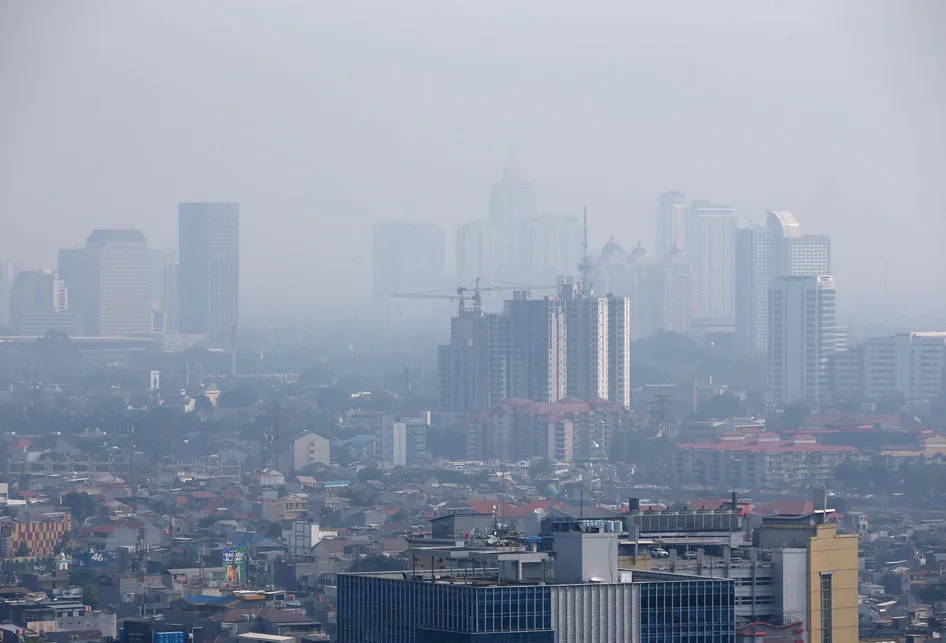
Jakarta's outdoor air quality regularly exceeds World Health Organization exposure limits, and that pollution doesn't stop at the building envelope — it infiltrates indoor spaces and measurably affects occupant health, which is why air quality has become a core criterion in green building certifications such as LEED and WELL — and a central focus of ALTA Integra's work as a green building consultant.
Why Air Quality Is a Building Design Issue, Not Just an Outdoor One
Air quality is one of the important aspects in certifying green buildings such as LEED v4.1 and WELL v2. This is strongly influenced by outdoor air pollution: the World Health Organization sets threshold values, or ambient air pollution concentration limits, that are commonly measured across four pollutants — particulate matter (PM), ozone (O3), nitrogen dioxide (NO2), and sulfur dioxide (SO2).
According to the 2020 World Air Quality Report by IQAir, public awareness of air quality in Indonesia has been rising, alongside growing recognition that clean, safe, healthy air is a basic human right and improving quality of life is a defining challenge of this century. Jakarta's air quality index has historically exceeded WHO exposure limits often enough that the city's air is classified as unhealthy, and one analysis of the city's deteriorating air quality projected it could shorten residents' lifespans by an estimated 2.3 years.
Where Jakarta's Air Pollution Comes From
A study on the main sources of Jakarta's air pollution, conducted by Bandung Institute of Technology (ITB) with funding from the Toyota Clean Air Project (TCAP), measured PM2.5 (particulate matter smaller than 2.5 micrometers) at three sites — Gelora Bung Karno, Kebon Jeruk, and Lubang Buaya — across the 2018-2019 rainy season (October-March) and dry season (July-September). The study found a clear seasonal pattern: rainy-season PM2.5 concentrations were consistently lower than dry-season levels, largely because rain precipitates pollutants and carries them into drainage channels, a process known as wet deposition.
The same study identified motor vehicle exhaust as the dominant source of Jakarta's air pollution, followed by a mix of non-vehicle sources — asphalt road dust, open burning, construction activity, sea salt, soil, and coal combustion — with sea salt, driven by onshore sea breezes, the leading non-vehicle contributor across all three measurement sites. The 2020 IQAir report also found Jakarta's PM2.5 fell 20% in 2020 compared with 2019, a drop tied to reduced vehicle and public-transport use during that year's large-scale social restrictions and work-from-home policies, a reminder of how directly mobility patterns affect the city's outdoor air.
Why Indoor Air Quality Can Be Worse Than Outdoor Air
Research by Jones et al. in China and India, both, like Indonesia, industrialized Asian countries, found indoor PM2.5 concentrations can exceed outdoor levels. The main drivers are a lack of ventilation openings during working hours, outdoor PM2.5 infiltrating through the building envelope, and higher ventilation exchange rates without adequate filtration; many building ventilation systems also maintain positive pressure during peak hours to reduce cooling load, which lowers fresh-air exchange and lets indoor PM2.5 accumulate.
A study by Paramitha and Haryanto on indoor PM2.5 exposure and lung function in Jakarta's Pulo Gadung industrial area found that when occupants inhale PM2.5-laden air that reaches the alveoli, the resulting interaction between particles and oxygen metabolites can overwhelm the body's ability to neutralize free radicals, producing oxidative stress that inflames the lungs and limits lung expansion, with long-term exposure linked to reduced indoor lung function.
What Building Design Can Do About It
Jones et al.'s research found that filtering ventilation air with a minimum MERV 13-rated filter can measurably reduce indoor PM2.5 concentration. Occupants can supplement this with air purifiers placed near a pollution source, run in a mode that prioritizes clean-air supply to the breathing zone. At the building level, LEED Operations and Maintenance (O+M) and WELL Building Standard certification both give owners a structured way to verify and improve indoor air quality, LEED with a focus on sustainable, efficient buildings, and WELL with a focus on occupant well-being, comfort, and health.
Good indoor air quality supports human productivity, health, and welfare, and helps fulfill the basic right to a healthier living environment. Integrating building architecture with building physics is what makes that possible in practice, which is the core of what ALTA Integra does for clients pursuing LEED and WELL certification for buildings in Jakarta and beyond.
FAQ
Why is Jakarta's air quality considered an emergency?
Jakarta's air quality index has repeatedly exceeded World Health Organization exposure limits, with one analysis estimating it shortens residents' life expectancy by roughly 2.3 years, and studies show indoor concentrations of fine particulate matter (PM2.5) can be even higher than outdoors.
What is the main source of Jakarta's air pollution?
A study by Bandung Institute of Technology, funded by the Toyota Clean Air Project, found motor vehicle exhaust to be the dominant source, followed by a mix of road dust, open burning, construction activity, sea salt, soil, and coal combustion.
Can indoor air actually be more polluted than outdoor air?
Yes. Research on buildings in industrialized Asian countries found indoor PM2.5 can exceed outdoor levels, driven by limited ventilation, outdoor pollutant infiltration through the building envelope, and inadequate filtration.
How can building design reduce indoor PM2.5 exposure?
Using ventilation filters rated at least MERV 13 has been shown to measurably reduce indoor PM2.5, alongside supplementary air purifiers near pollution sources and following green building certification frameworks such as LEED O+M and WELL.
What's the difference between LEED and WELL certification for air quality?
LEED focuses on creating sustainable, energy-efficient buildings, while WELL focuses specifically on occupant well-being, comfort, and health; both include indoor air quality as a certification criterion.
Acknowledgment
This article draws on research originally contributed by Angela Michelle Sutopo (Universitas Multimedia Nusantara) during an internship with ALTA Integra.
Sources
[1] IQAir, "2020 World Air Quality Report," 2020.
[2] D. R. Boyd, "The Human Right to Breathe Clean Air," Annals of Global Health, 2019, vol. 85, no. 1.
[3] WHO, "Health for All in the 21st Century," 1997.
[4] LEED, "LEED v4 User Guide," U.S. Green Building Council, 2014.
[5] International WELL Building Institute, "The WELL Certification Guidebook," 2021.
[6] WHO, Air Quality Guidelines: Global Update 2005 (particulate matter, ozone, nitrogen dioxide, sulfur dioxide), WHO Regional Office for Europe, 2006.
[7] IQAir, "2019 World Air Quality Report — Region & City PM2.5 Ranking," 2019.
[8] M. Greenstone and Q. Fan, "Air Quality Life Index Update: Indonesia's Worsening Air Quality and its Impact on Life Expectancy," 2019.
[9] Bandung Institute of Technology, "Main Sources of Air Pollution in Jakarta" (Toyota Clean Air Project).
[10] BMKG, "Informasi Konsentrasi Partikulat (PM2.5)."
[11] S. Pramana, D. Y. Paramartha, Y. Adhinugroho, and M. Nurmalasari, "Air Pollution Changes of Jakarta, Banten, and West Java, Indonesia During the First Month of COVID-19 Pandemic," Journal of Business, Economics and Environmental Studies, 2020, vol. 10, no. 4.
[12] E. R. Jones, J. G. Cedeño Laurent, A. S. Young, P. MacNaughton, B. A. Coull, J. D. Spengler, and J. G. Allen, "The Effects of Ventilation and Filtration on Indoor PM2.5 in Office Buildings in Four Countries," Building and Environment, 2021, vol. 200.
[13] E. Pramitha and B. Haryanto, "Effect of Exposure to 2.5 μm Indoor Particulate Matter on Adult Lung Function in Jakarta," Osong Public Health and Research Perspectives, 2019, vol. 10, no. 2.
[14] H. Park, S. Park, and J. Seo, "Evaluation on Air Purifier's Performance in Reducing the Concentration of Fine Particulate Matter for Occupants According to its Operation Methods," International Journal of Environmental Research and Public Health, 2020, vol. 17, no. 15.
Suggested internal links: Green Building Advisory & Certification · Healthy Building Advisory & Certification · Bioclimatic Passive Design