Structure-Borne Noise vs. Airborne Noise in Buildings
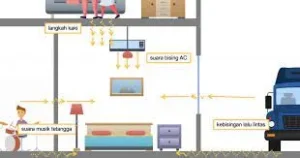
Structure-borne noise and airborne noise are the two paths sound takes to reach a listener inside a building: airborne noise travels through the air and enters a room through openings or by vibrating a solid surface, while structure-borne noise is generated directly inside a solid building element — a wall, floor, or slab — and radiates as sound once it reaches the receiving room. Diagnosing which path a noise problem is taking is the first step toward choosing an effective noise control strategy, a core part of the acoustic engineering design work ALTA Integra, an acoustic consultant, carries out for architects and building owners.
Why the Distinction Matters
Inside a building, we hear many kinds of sound, not all of them wanted. Alongside pleasant sounds such as birds chirping, occupants also encounter disturbing sounds: traffic, footsteps from the floor above, conversation through a wall, or loud music from another room. All of these sounds reach us because a medium — air or a solid object — transmits the sound wave from its source to our ears.
A common and costly mistake in building acoustics is applying the wrong noise mitigation strategy because the actual transmission path was never correctly diagnosed. Fixing the wrong problem wastes money and time, and for building owners it can also cost reputation. Controlling noise effectively requires understanding two things: (1) what excites the sound, and (2) how it is transmitted to the receiving space.
What Is Structure-Borne Noise?
Structure-borne noise results from either an impact on a solid surface or a low-frequency sound vibrating a solid surface. In both cases, the generated vibration travels through the building's structural elements — starting at the wall, floor, or slab where it originates — and radiates from the solid surface of the receiving room as audible sound.
### Example: Impact on a Solid Surface
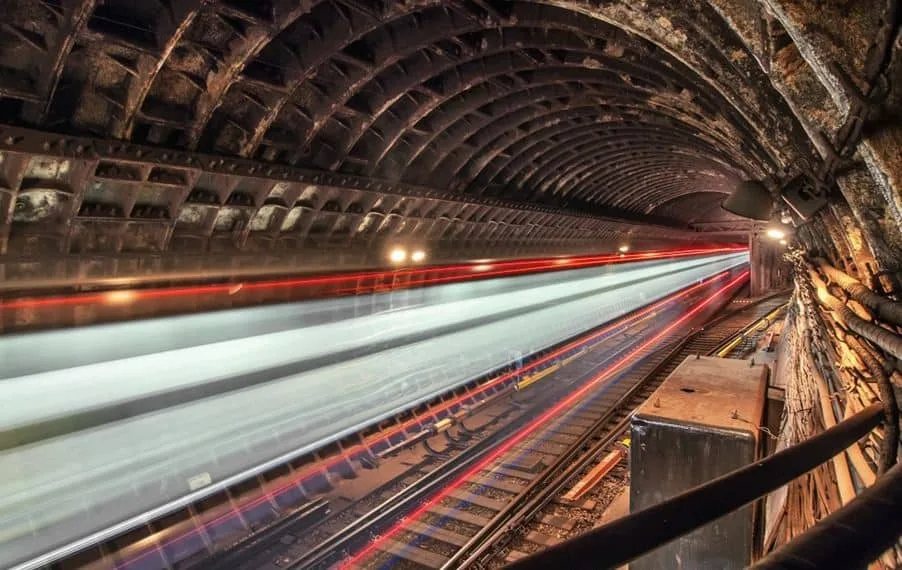
The vibration felt on the ground when a subway train passes below is a clear example of structure-borne noise: the wheel-rail interaction generates a powerful vibration that oscillates the surrounding structure's particles. It may seem odd to call vibration "noise," but in physics, sound is the mechanical vibration of particles — everyday sounds like conversation or music are simply the audible end of that same phenomenon. In high-rise buildings, structure-borne noise from impact most often comes from footsteps on the floor above.
### Example: Low-Frequency Vibration
A neighbor's Friday-night party is a second example. The wall may attenuate the music enough that the sound itself isn't the main disturbance — but the vibrating windows and furniture can still be very noticeable. This happens because when a sound's frequency matches the natural frequency of an object such as glass, that object oscillates more strongly than it would at other frequencies. Subwoofers, designed to produce very low-frequency sound, are a common trigger, since many building elements have naturally low resonant frequencies.
What Is Airborne Noise?
Airborne noise happens when energy causes the surrounding air to compress. The resulting higher-pressure region is followed by rarefaction — a lower-pressure region — and this compression-rarefaction pattern moves away from the source at the speed of sound.
Airborne noise can reach a room directly, through an opening such as a door, window, or even a small keyhole that connects two spaces. It can also reach a room indirectly: when airborne noise strikes a solid surface like a wall, it vibrates the wall's particles, and if the sound energy is strong enough, that vibration travels through the wall and re-radiates as sound on the other side — even with every opening closed.
Why Getting the Diagnosis Right Matters for Design
Because airborne and structure-borne noise travel by fundamentally different physical mechanisms, they also call for different control strategies. Acousticians typically evaluate airborne insulation and impact or structure-borne insulation separately, and reference how the speed of sound varies with the transmission medium and temperature (see Hyperphysics, Georgia State University) to model how a specific path will behave in a real building. Getting the diagnosis right before specifying a solution is what separates an effective noise control design from an expensive guess.
FAQ
What is the difference between airborne noise and structure-borne noise?
Airborne noise travels through the air and enters a room through openings or by vibrating a surface from the air side. Structure-borne noise originates as vibration inside a solid building element, such as a floor or wall, and radiates as sound once that vibration reaches the receiving room.
What causes structure-borne noise in a building?
It is caused either by a direct impact on a solid surface — footsteps are the most common example in buildings — or by a low-frequency sound vibrating a solid surface strongly enough to set it oscillating.
Can airborne noise pass through a closed door or window?
Yes. Even with every opening sealed, airborne noise can still vibrate a solid surface such as a wall; if the sound energy is high enough, that vibration travels through the wall and radiates as audible sound on the other side.
Why do windows vibrate when bass-heavy music plays nearby?
Because when a sound's frequency matches the natural frequency of an object such as a glass pane, the object oscillates more strongly than at other frequencies — a resonance effect, not the music itself passing through the glass.
Why does correctly diagnosing the noise path matter?
Airborne and structure-borne noise travel through different physical mechanisms and therefore need different mitigation strategies. Misdiagnosing the path leads to costly, ineffective fixes.
Suggested internal links: Sound Reflection, Absorption & Diffusion in Rooms · Acoustic Engineering Design · History & Comparison of Building Noise Rating Standards