Acoustic Design Consultation Services
Alta Integra's acoustic design team provides consulting services across architectural, building, industrial, and transportation acoustics, guiding projects from conception and planning through design, construction, testing, and commissioning. The starting point for every project is the user's psychoacoustic preferences and needs, from which the technical planning fundamentals are developed — because optimizing objective acoustic criteria such as ideal reverberation time is necessary, but not sufficient, for a space that actually sounds right to the people using it.
An Integrated, Multi-Disciplinary Approach
At design phase, Alta Integra's acoustic team always coordinates with other disciplines involved in a project — architecture, interior design, lighting, and mechanical-electrical engineering. During construction, the team works directly with manufacturers, distributors, construction management, project management, and contractors to ensure every acoustic detail is actually built as designed, rather than lost between drawing and execution.
Architectural Acoustics for Performance and Cultural Spaces
Theatres, concert halls, opera houses, and music venues function as more than event spaces — in many cities they become architectural symbols in their own right. Live performance, film, and music all demand spaces whose acoustic quality is as carefully considered as their visual design, since the acoustic experience is inseparable from how a live event is perceived.
Sound Production and Sound Reproduction Facilities
Sound production facilities are a critical part of creating content in today's digital media landscape — acoustic quality is a baseline requirement, not an optional extra, for movie, stage, music, foley, and dubbing studios, each of which needs a flexible acoustic space suited to capturing and recording different kinds of sound.
Sound reproduction spaces — critical listening rooms, control rooms, and home theatres — need a natural acoustic ambience that integrates seamlessly with interior design and AV technology to reflect the owner's personal statement. Good acoustics in a music/movie/TV control room directly improves production quality, while the same principle applied to a home theatre or private listening room delivers a genuinely better listening experience.
Speech Intelligibility and Everyday Spaces
Sound perception is one of the most important factors in how people interact with each other, which is why acoustic design, interior design, and AV integration together shape how well thought and communication come across in a space. Speech intelligibility and speech privacy in worship spaces, lecture halls, conference rooms, exhibition spaces, open-plan offices, and meeting rooms have a direct, measurable effect on productivity and understanding.
Acoustics, Sustainability, and Wellbeing
Alta Integra's acoustic design team works to meet acoustic criteria and the associated credit points required under sustainable and wellbeing design frameworks. This includes acoustically optimizing air vents so that natural ventilation can enter a building without letting in unwelcome street or background noise — an approach that integrates directly with lighting and daylighting design to create a genuinely productive space, rather than treating acoustics, daylight, and ventilation as separate problems.
Industrial and Environmental Noise Control
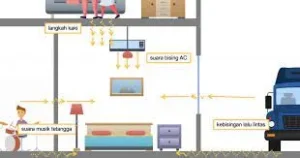
Beyond architectural interiors, the team analyzes building design and recommends acoustic treatments to control noise transfer between adjacent spaces, working closely with building services engineers in sound-sensitive environments to minimize noise intrusion from heating and cooling systems. This extends to analyzing and reducing structural vibration levels and isolating vibration-sensitive equipment, and to designing measures that mitigate industrial noise emissions from mechanical and electrical equipment at nearby noise-sensitive locations such as residential areas — identifying the level of noise reduction required (through industrial acoustic enclosures or sound-absorbing panels) to comply with a project's noise criteria.
Transportation Noise Modeling
For transportation infrastructure, the team uses 3D modeling to predict environmental noise emissions and develop noise control solutions, including acoustic modeling for new and upgraded mass transportation facilities such as trains and airports to predict noise levels at nearby sensitive receptors. This informs the design of noise barriers, sound barriers, and acoustic fences, alongside noise monitoring to determine actual levels experienced at sensitive receptors — residential dwellings, educational facilities, and similar locations — near an existing or proposed transportation facility.
Project Experience
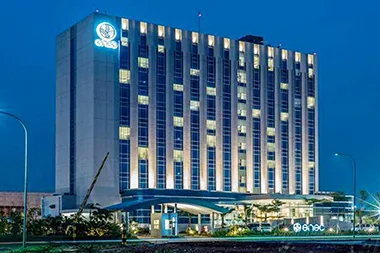
Alta Integra's acoustic design and noise control work spans architectural interior projects such as the MD Pictures and Kino Office fit-outs, hospitality projects including noise control and AV integration at Park Royale Hotel in Sentul, industrial and environmental noise control at Pertamina Gas in Palembang, and building/environmental noise control at Enso Hotel in Bekasi — alongside daylighting and acoustic integration work at Canisius College.
Frequently Asked Questions
What does an acoustic design consultant actually do?
An acoustic design consultant analyzes a space's intended use, models and recommends acoustic treatments, coordinates those recommendations with architecture, interior, lighting, and MEP design, and verifies through construction-phase testing that the built result matches the design.
Is acoustic consulting only for concert halls and studios?
No — it applies to any space where sound quality, noise control, or speech intelligibility matters, including offices, schools, worship spaces, hotels, industrial facilities, and transportation infrastructure.
How does acoustic design connect to green building and wellbeing certification?
Acoustic comfort is one of the credited criteria in sustainable and wellbeing building frameworks, so acoustic design is coordinated with ventilation and daylighting strategy to meet those requirements without compromising comfort.
Can acoustic problems from adjacent industrial or transportation noise be fixed after construction?
Often yes, through targeted measures such as noise barriers, enclosures, or added mass in a partition — but early acoustic modeling during design is more cost-effective than retrofitting after the fact.
Why is coordination with other design disciplines important for acoustics?
Acoustic performance is affected by architectural form, interior materials, mechanical systems, and lighting layout, so treating acoustics in isolation from these disciplines risks a design that looks right but does not sound right.
Related reading: Room Acoustic Measurement for Sound Production · Measuring Room Acoustics for Sound Reproduction · Green Building Advisory & Certification