EASE Room Modelling and Auralisation: ALTA Integra's RECAV 2017 Workshop
Four steps from a SketchUp model to letting a client hear a room that does not exist yet.
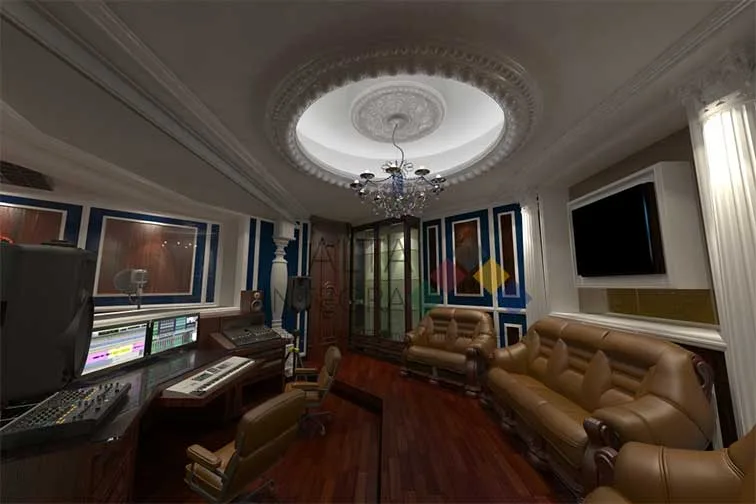
Herwin Gunawan, Principal of ALTA Integra, taught a hands-on acoustics workshop at the Regional Conference on Acoustics and Vibration in Denpasar, Bali on 27–28 November 2017, covering the full room modelling workflow: importing geometry from SketchUp, applying EASE material and loudspeaker databases, optimising reverberation time in the model, and producing auralisation — an audible preview of how a room will sound before it is built. That last step is the one worth understanding, because it changes what an acoustic report can do. A client cannot evaluate a reverberation figure. They can evaluate hearing the room.
The Four-Stage Workflow
| Stage | What happens | Why it matters |
|---|---|---|
| 1. Geometry import | 3D room model built in SketchUp, imported into the acoustic simulation environment | Modelling starts from the architect's actual geometry rather than a simplified box |
| 2. Materials and loudspeakers | EASE surface absorption database and loudspeaker performance database applied | Predicted behaviour reflects real specified materials and real speaker directivity |
| 3. Reverberation optimisation | Model used to test and refine RT before construction | Changes cost a simulation run rather than demolition |
| 4. Mapping, parameters and auralisation | Reading simulation maps and acoustic parameters; generating an audible preview | Turns a technical result into something a non-specialist can judge |
Stages one to three produce numbers. Stage four is what lets a client participate in an acoustic decision rather than approving one.
What EASE Does
EASE — Enhanced Acoustic Simulator for Engineers — is an industry-standard acoustic simulation package carrying databases of surface absorption coefficients and loudspeaker performance data. It models how a room will behave acoustically before construction, which is the same approach applied on the Mandiri Club function hall, where five parameters were evaluated against an existing interior design rather than requiring the scheme to be reworked.
Because the workshop was hands-on, participants brought their own laptops with EASE pre-installed and were expected to arrive knowing basic room acoustics terminology. That prerequisite is itself informative about the level: this was working method, not an introduction.
Auralisation: Hearing a Room Before It Exists
Auralisation generates an audible preview of how a space will sound, derived from its acoustic simulation model. It matters because acoustic design has a communication problem that most engineering disciplines do not: the deliverable is invisible and the client cannot evaluate it until the building is finished and the money is spent.
A reverberation time of 1.4 seconds means nothing to a building owner. Hearing the difference between 1.4 and 2.1 seconds in their own room, before construction, means a great deal — and it moves the acoustic decision from a specialist recommendation the client accepts on trust to one they can genuinely take part in.
Other Workshop Contributors
Herwin Gunawan shared the session with Sentagi Sesotya Utami, S.T., M.Si., Ph.D., of the Engineering Physics Department at Universitas Gadjah Mada and formerly coordinator of UGM's InsGReeb (Integrated Smart and Green Building) research group. Neosia Training Center provided SketchUp training to participants.
RECAV 2017 combined research paper publication with acoustics and vibration workshops, aimed at equipping students, scientists and engineers with current practice. ALTA Integra also submitted two papers to the same conference — covered in our RECAV 2017 overview.
Still the Working Method
The workflow taught in 2017 remains how ALTA Integra approaches room acoustic design: build an accurate 3D model, simulate behaviour before construction, and use auralisation so clients can hear a space before it exists — part of its acoustic engineering and design practice.
FAQ
What is EASE and why is it used in acoustic simulation?
EASE (Enhanced Acoustic Simulator for Engineers) is an industry-standard acoustic simulation package containing databases of surface absorption coefficients and loudspeaker performance data. It models how a room will behave acoustically before construction, when design changes are still inexpensive.
What is auralisation?
The process of generating an audible preview of how a space will sound, derived from its acoustic simulation model. It lets designers and clients evaluate a room's acoustics before construction — turning a technical result into something a non-specialist can actually judge.
What did the RECAV 2017 workshop cover?
Four connected stages: importing room geometry from SketchUp, applying EASE material and loudspeaker databases, optimising reverberation time within the model, and reading simulation mapping and acoustic parameters through to auralisation.
Who else taught at the workshop?
Sentagi Sesotya Utami, S.T., M.Si., Ph.D., of Universitas Gadjah Mada's Engineering Physics Department and formerly coordinator of UGM's InsGReeb research group, alongside Neosia Training Center, which provided SketchUp training.
Does ALTA Integra still use this modelling approach?
Yes. Building an accurate 3D model, simulating acoustic behaviour before construction and using auralisation so clients can hear a space before it exists remains ALTA Integra's standard method on room acoustic projects across Indonesia.