Classroom Acoustics and Daylighting: Designing Schools Around How Learning Actually Happens
A classroom where students cannot clearly hear the teacher has failed at the one thing it exists to do. Nothing else in the building compensates.
Classroom acoustics decide whether a classroom where students cannot clearly hear the teacher has failed at the one thing it exists to do, and no other quality of the building compensates for it. That is the case for treating classroom acoustics and daylighting as engineering from the design stage: both act directly on the mechanism of learning, speech intelligibility and concentration.
High-performance school design means a building that is cost-efficient to build, operate and maintain across its full lifecycle and actively supports how teachers teach and students learn. Those two goals are usually presented as a trade-off. Over a building's life they mostly are not, because the operating and maintenance costs of a school run for decades against a construction cost paid once.
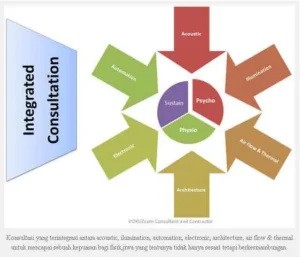
Engineering Disciplines and What Each Affects
| Discipline | Direct effect on learning |
|---|---|
| Noise control | Whether classroom activity competes with background or intrusive noise |
| Architectural acoustics | Speech intelligibility: music room and performance space quality |
| Daylighting design | Student concentration and study performance |
| Thermal performance and ventilation | Comfort and alertness through a school day in a tropical climate |
| Green building design and certification | Operating cost across decades, plus institutional credentials |
Each discipline is also designed and then verified on site. Classroom acoustics and noise control performance in particular should be measured after construction. Measurement confirms what the specification actually delivers.
Why Schools Are a Distinct Design Problem
Education faces a set of pressures most building types do not. Many children still cannot access basic education, and many existing school buildings fall below acceptable standards even where funding exists. At the same time, teaching methods and curricula keep changing, which means the criteria used to design a school's facilities, technology and environment have to be able to change with them.
That last point has a direct design consequence: a school designed tightly around one pedagogy locks the institution into it. A building that cannot accommodate group work, or hybrid delivery, or a shift in class size, becomes a constraint on the education it was built to serve. Designing for continuous long-term use that can adapt over time is the practical answer.
Classroom Acoustics: The Mechanism That Drives Learning
Classroom acoustics act on speech intelligibility and noise intrusion, both of which determine directly how well students hear and follow instruction. This is what classroom acoustics really governs: the effect is not marginal. A child straining to separate a teacher's voice from background noise is spending cognitive capacity on listening that would otherwise go to comprehension, and younger children and second-language learners are affected more than adults are.
Music classrooms and any space where classroom acoustics and performance intelligibility matter need their own treatment again, on the same principles set out in our article on RT60 targets by room type. Both the design and its on-site verification belong in scope: a specification that was never measured is an assumption.
Daylighting: An Investment in Concentration
Daylighting design affects student concentration and study performance, which is why it is engineering decided at the design stage. In a tropical climate it also carries the conflict covered in our article on daylighting and thermal comfort: the openings admitting useful light also admit solar heat, and glare from unmanaged daylight is what makes teachers close blinds and switch on lights, defeating the daylighting strategy with the building's own occupants.
In a classroom that failure mode is more likely than in most building types, because there is usually someone in the room with both the authority and the immediate motive to close the blinds.
Lifecycle Cost in a Sector That Cannot Absorb Surprises
A high-performance school is cost-efficient to build, operate and maintain. That framing matters more in education than in most sectors, because school operating budgets are typically fixed, publicly scrutinised and unable to absorb an unexpected energy bill or a remedial acoustic programme.
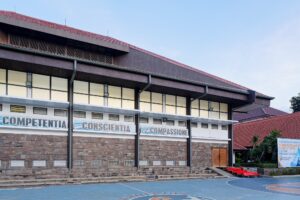
Designing within real budget limitations is part of the brief itself, built into the design from the start. Where a project cannot fund everything, the sequence that protects learning outcomes always starts with classroom acoustics: get the classroom acoustics and daylighting right first, because they act on the mechanism, and treat the rest as improvable later. ALTA Integra's education work spans acoustics, noise control, lighting and daylighting, thermal performance and green building certification, coordinated as one integrated design, including total integration engineering design at Canisius College, Jakarta.
FAQ
What does high-performance mean for a school building?
Cost-efficient to build, operate and maintain across its lifecycle, while actively supporting teacher-student interaction and learning outcomes beyond minimum construction standards. Operating cost runs for decades against a construction cost paid once.
Why does daylighting matter in a school?
It affects student concentration and study performance directly. In tropical climates it also has to be balanced against solar heat gain and glare. Glare is what makes teachers close the blinds and switch on lights, defeating the daylighting strategy entirely.
How does acoustics affect a classroom?
Through speech intelligibility and noise intrusion, which determine how well students hear and follow instruction. A child straining to separate a teacher's voice from background noise spends capacity on listening. Comprehension suffers as a result, and younger children and second-language learners are affected more.
Can green building certification apply to an existing school?
Yes. Green building design and certification can be applied to upgrades of existing facilities as well as new builds, with the appropriate scheme and achievable scope depending on the institution's goals and constraints.
What should a school prioritise on a limited budget?
Classroom acoustics and daylighting, because both act directly on the mechanism of learning: hearing the teacher and sustaining concentration. Other improvements can follow. These two are hardest to retrofit and most consequential if the design gets them wrong.
ALTA Integra applies this five-discipline approach through its acoustic engineering and design practice on live education complex projects, where classroom acoustics and daylighting are specified together in one brief.