High-End Audio Room Acoustic Design and Build
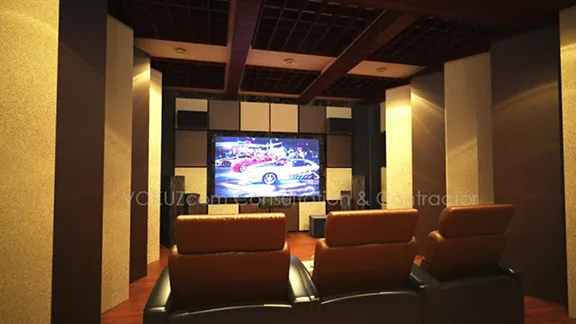
"You can touch the music as if it is there." High-end audio is the pursuit of reproducing a recording as close as possible to a real music performance, the way the sound engineer originally intended it to be heard. Achieving that sensation depends on two things working together: room acoustic design and speaker choice — and of the two, room acoustic design is the element most often underestimated by owners who assume better speakers alone will solve a disappointing-sounding room.
The Design Target: A Flat Room Response
The acoustic target for a high-end audio room is a room response — the tonality heard at the listening position — that stays close to a flat line across the frequency range. In practice, three things cause coloration of tonal balance in a high-end audio room: room modes, reflection, and reverberation. Left unaddressed, any one of these can make an excellent recording and an excellent speaker still sound wrong in the room where they are actually heard.
### Room Modes
Room modes are resonances created by parallel surfaces reinforcing certain frequencies (usually in the bass range) more than others, based on the room's dimensions. A comparative analysis of room modes for a given room geometry shows exactly where these resonant buildups occur, which is the starting point for either adjusting the room's proportions or treating specific frequencies directly.
### Reflection and Ray Tracing
Ray tracing analysis maps how sound reflects off room surfaces before reaching the listening position — typically studied as first, second, and third reflection points. Each reflection point represents a specific spot where a surface treatment (absorption or diffusion) can be applied to control how much of that reflected energy reaches the listener's ear, and when, relative to the direct sound from the speaker.
An Integrated Design Approach
Alta Integra's approach to high-end audio room design and build treats acoustics as one part of an integrated, coordinated design process alongside interior design, lighting design, and mechanical-electrical design — rather than as an isolated technical add-on applied after the interior is already finalized. This coordination covers:
Acoustics Design — correct room ratio, correct seating position, and the right acoustic materials and panels for the specific coloration problems identified in that room.
Lighting Design — ambience lighting that supports the listening experience without competing with the acoustic treatment for wall and ceiling space.
Interior Design — theme, color, decoration, and furniture chosen to harmonize with the acoustic treatment rather than undermine it.
Audio Design — system matching and speaker positioning tuned to the room's actual measured behavior, not a generic setup guide.
Why an Integrated Approach Matters
A high-end audio room designed this way brings practical advantages beyond sound quality alone. An integrated, comprehensive design approach delivers a genuinely high-performance room; it saves time and cost that would otherwise be lost to faulty, uncoordinated designs discovered only after construction; and it increases the owner's satisfaction — and, for spaces used to host guests or clients, the owner's reputation — because the room performs and looks the way it was meant to from the start, rather than needing rework.
Room Ratio and Seating Position
Two decisions made early in a high-end audio room project have an outsized effect on the final result: room ratio and seating position. Room proportions determine how room modes distribute across the bass frequency range — a poorly chosen ratio can stack multiple modes at the same frequency, producing an exaggerated bass peak, while a well-chosen ratio spreads them more evenly. Seating position interacts directly with those modes and with the room's reflection pattern, which is why moving a listening position by even a small distance can noticeably change how balanced a room sounds. Getting both right at the design stage, before construction and interior finishes are locked in, is far less costly than correcting them afterward.
Frequently Asked Questions
What makes a high-end audio room sound "right"?
A room response that stays close to flat across the frequency range, so the room does not add its own coloration to what the speakers and recording are actually producing.
What are room modes, and why do they matter?
Room modes are resonant buildups at certain frequencies caused by a room's dimensions and parallel surfaces; they are one of the three main causes (along with reflection and reverberation) of tonal coloration in a listening room.
What is ray tracing used for in audio room design?
Ray tracing maps first, second, and third reflection points — the specific spots on room surfaces where sound reflects toward the listening position — so acoustic treatment can be targeted exactly where it is needed.
Does a high-end audio room need to be acoustically treated separately from its interior design?
No — the most reliable results come from coordinating acoustics, interior design, lighting, and audio system design together from the start, rather than treating acoustics as an afterthought.
Can an existing room be corrected after it is already built?
Often yes, once room modes and reflection points are identified through analysis — but coordinating acoustic design during the original build avoids the added cost and compromise of retrofitting.
Related reading: Acoustic Design Consultation Services · Measuring Room Acoustics for Sound Reproduction · Audiovisual Media Technology Design