Acoustic Noise Measurement: Turning a Complaint Into Data You Can Design Against
Without measurement, a noise fix is a guess — and guesses in acoustics tend to be either over-specified or aimed at the wrong path entirely.
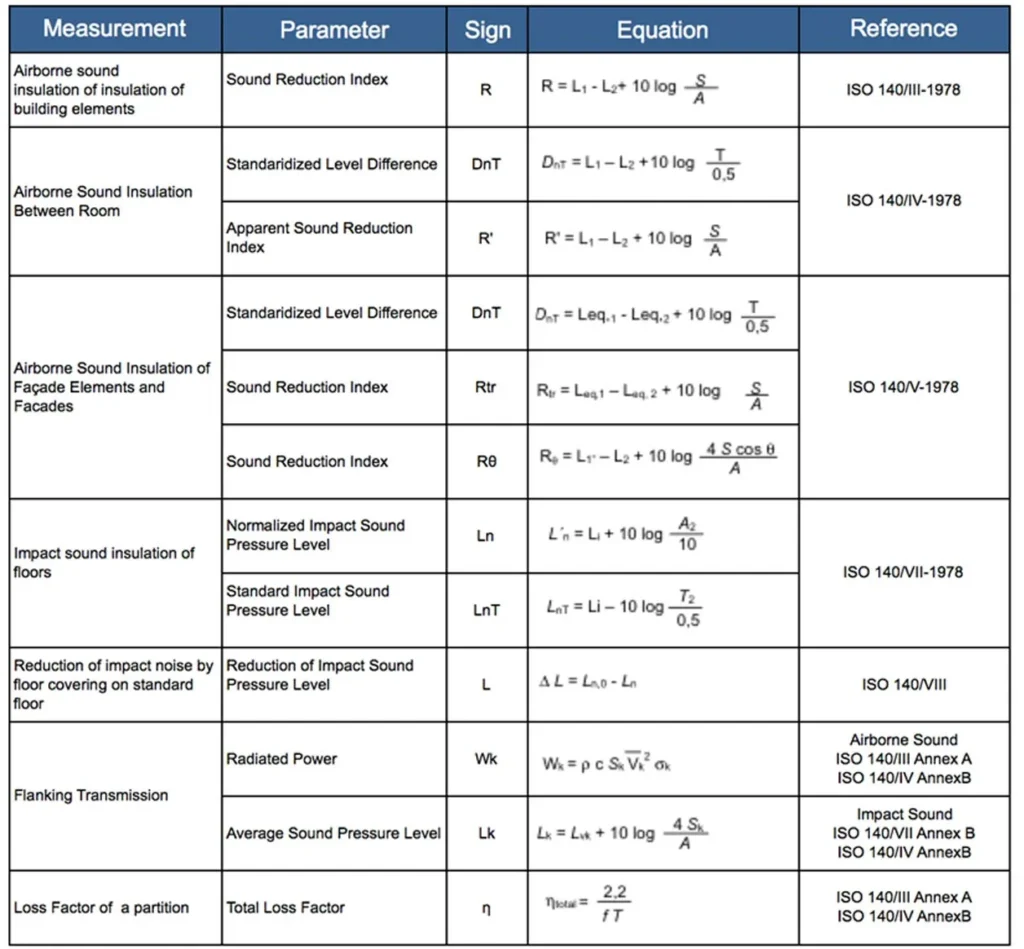
Acoustic noise measurement is what turns "this room is too loud" into a specification. It identifies which frequencies are the problem, how far they sit from a recognised threshold, and where the noise path actually runs — three things a complaint cannot tell you and a guess usually gets wrong. The failure mode without it is predictable: add insulation, move a wall, install a barrier, and discover the noise was arriving by a path none of those addressed.
Acoustic noise measurement is normally needed at two points in a project, and the reason for each is different.
Four Acoustic Noise Measurement Parameters and What Each Reveals
| Parameter | What it measures | What it tells you that the others don't |
|---|---|---|
| Sound pressure level (SPL) | Loudness at a point, in dB or dBA | Whether a level breaches a compliance or comfort threshold |
| NC / NR curves | Measured spectrum compared against a reference curve for the room type | Not just whether a room is too loud, but at which frequencies it fails |
| Frequency-band analysis | Energy distribution across octave or ⅓-octave bands, ~20 Hz to 20 kHz | Which treatment strategy applies — low-frequency rumble and high-frequency hiss need different answers |
| Reverberation time | How long sound persists inside the room after the source stops | Whether the problem is intrusion from outside or behaviour inside |
The third column is why a single dBA reading is rarely enough. It establishes that a problem exists without indicating what to do about it.
SPL and Why dBA Is the Default
Sound pressure level, in decibels or A-weighted decibels, is the most basic acoustic noise measurement of loudness at a given point. A-weighting (A-weighting) adjusts the raw figure to reflect how the ear responds across frequency, which is why dBA is standard for nuisance and compliance assessment — it approximates what a complainant is actually reacting to rather than what a meter physically registers.
NC and NR: Comparing a Spectrum, Not a Number
Rather than a single decibel figure, engineers plot measured background noise across frequency bands and compare it against Noise Criteria or Noise Rating curves. Those curves describe an acceptable background profile for a room type — a recording studio and an open-plan office have very different acceptable targets — so the comparison shows not only whether a room is too loud but at which frequencies it fails. Our article on reading an NC rating covers the method and its limits, including that NC reports the worst band and does not extend below 63 Hz.
Frequency Bands: Where the Treatment Decision Is Made
Noise is rarely a single tone. It is energy spread across the audible range, usually analysed in octave or one-third-octave bands. That distribution is what determines the fix, because low-frequency mechanical rumble and high-frequency vent hiss behave differently and respond to different treatment — mass and isolation for one, absorption and airflow adjustment for the other.
This is the single strongest argument for acoustic noise measurement before specifying. A treatment matched to the wrong frequency range can be well executed, expensive, and ineffective at the same time.
Measuring Before and After Construction
Early acoustic noise measurement, right after pre-design, establishes a baseline of the site's existing noise conditions while design decisions are still unfixed. That is the most cost-effective moment to catch a problem, because changes are still cheap on paper.
Post-construction acoustic noise measurement confirms whether the finished building performs as designed. The gap between the two datasets is the useful output — it locates precisely where construction, material substitution or workmanship diverged from the specification, which is information no single measurement produces.
From Acoustic Noise Measurement to a Targeted Fix
Once acoustic noise measurement parameters are compared against the appropriate reference, the recommendation can be specific: added mass in a partition, absorption at a particular frequency range, sealing a flanking path, or reworking a mechanical system's isolation. Each addresses a different diagnosis, and choosing among them is what measurement makes possible.
The commercial argument is straightforward. A generic treatment package either over-treats — spending on performance the problem never required — or under-treats and gets revisited. A measured recommendation is also verifiable in a way a generic one is not, which matters when the client asks whether the money worked. ALTA Integra begins noise control consultations with this acoustic noise measurement step through its acoustic engineering and design practice.
FAQ
What is acoustic noise parameter measurement?
On-site testing of sound levels and frequency content in and around a building, used to compare actual conditions against recognised standards and diagnose the specific cause and path of a noise problem rather than inferring it from the complaint.
What is the difference between SPL and NC or NR ratings?
SPL is a direct decibel reading at a point. NC and NR are reference curves describing an acceptable noise spectrum across frequency bands for a given room type, so a measured spectrum can be judged against a use-appropriate target rather than a single number.
Why measure both before and after construction?
Pre-design measurement establishes a baseline while changes are still cheap. Post-construction measurement confirms the building performs as designed. The gap between the two locates where construction, material substitution or workmanship diverged from specification.
Does a noisy room always need major work to fix?
Not necessarily. Frequency-band measurement often shows the problem concentrated in a specific range, which allows targeted treatment rather than a full rebuild. It equally often shows the noise arriving by a path the obvious fix would not have addressed.
Who should carry out acoustic measurement?
A qualified acoustic consultant using calibrated equipment and comparing results against recognised standards for the room or building type. Calibration and the right reference standard matter as much as the measurement itself.