Designing a Performing Arts Hall: Why Backstage Conditions Belong in the Brief
A hall that sounds superb from the seats and is difficult to work in behind them will eventually sound worse from the seats too.
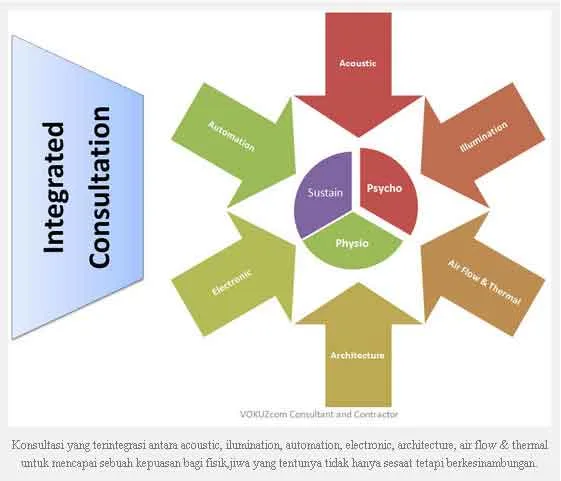
A performing arts hall draws together around eleven engineering and design disciplines, and its quality is decided by how well they were coordinated rather than by how good any one of them was. That is a different problem from choosing the right venue form — which is covered in our article on performing arts venue types. This one is about the process, and about the part of the brief most often treated as secondary: the conditions performers and crew work in.
The argument for taking that seriously is not fairness. A hall that sounds superb from the seats and is difficult to work in behind them will eventually sound worse from the seats too, because what an audience receives is produced by people whose working conditions shape their output.
A Performing Arts Hall's Eleven Disciplines
| Discipline | What it determines for the performance |
|---|---|
| Architecture and interior design | Form, volume and surfaces — which set the acoustic ceiling before any treatment |
| Architectural acoustics | Whether speech and music reach the audience clearly |
| Noise control | Whether background intrusion undermines quiet passages |
| Lighting and daylighting | Performance atmosphere, and comfort in front-of-house and preparation spaces |
| Audio-video and IT | Reinforcement, broadcast and recording capability |
| MEP, thermal, ventilation, energy | Whether the building is comfortable and affordable to operate after opening night |
The first row constrains every row below it. Volume and surface decisions are made earliest and reversed least easily.
What a Performing Arts Hall Has to Deliver
Four outcomes have to be achieved together rather than traded against each other: an engaging experience for visitors from arrival to curtain; comfort and productivity for performers and the management team working behind the scenes; a contribution to cultural continuity, since a performing arts hall is itself a venue for it; and safety and security for everyone inside.
Trading is what normally happens. Visitor experience is visible, fundable and photographed. Backstage conditions are none of those things, which is why they absorb the value engineering.
Research Before Drawing
In pre-design, research establishes what the finished performing arts hall has to satisfy for three constituencies at once — the performer, the audience, and the institution that builds and operates it. Those three want different things. A performer wants to hear colleagues and feel supported by the room. An audience wants clarity and envelopment. An operator wants a building that is flexible, safe and affordable to run for decades.
Integrated design means every element is coordinated with every other from that stage, so the building reaches its maximum performance rather than compromising in one discipline to fix a problem created in another. The alternative — sequential design — resolves each discipline against whatever the previous one left, and the result is a set of individually reasonable decisions that add up to a compromised room.
Why Performer Conditions Are Not Secondary
It is easy to design around the audience in a performing arts hall and treat backstage as support space. The conditions that matter are specific: acoustic isolation between stage, backstage and rehearsal spaces, so a rehearsal does not bleed into a performance or a get-in into a matinee; lighting and ventilation in preparation areas, where performers spend far longer than they do on stage; and building systems reliable enough to hold through long rehearsal and performance schedules.
Each of these feeds back into what audiences receive. A performer who cannot hear the ensemble plays differently. A crew working in a poorly ventilated control position makes different decisions by hour four. Performer-facing conditions are inseparable from the visitor experience rather than a lower priority beneath it — which is why they belong in the brief as an outcome, not in the fit-out as a residual.
Working With the Performing Arts Hall Design Team
The consultant's role in a performing arts hall project is not to take over the design. It is to ensure the acoustic, lighting and building-performance dimensions are considered as early and as collaboratively as the architectural vision — which in practice means being present when volume, proportions and adjacencies are decided, because those decisions set the ceiling on everything that follows. ALTA Integra works this way with architects, interior designers and other consultants on performing arts hall projects through its acoustic engineering and design practice.
FAQ
What is integrated design for a performing arts building?
Coordinating architecture, acoustics, lighting, AV and building services together from the earliest stage, so the finished hall performs across all disciplines rather than having one compromise another. The alternative resolves each against whatever the previous discipline left behind.
Why does a performing arts hall need specialist acoustic design?
Because speech intelligibility and music quality depend on reverberation, reflection and noise control engineered for the hall's intended use. Architecture alone does not produce them — form and volume set the ceiling, but reaching it requires deliberate acoustic design.
How early should acoustic and lighting design be involved?
From pre-design research, so engineering requirements shape the architecture rather than being retrofitted into a fixed layout. Volume, proportion and adjacency decisions are made earliest and reversed least easily, and they constrain every discipline downstream.
Why do backstage conditions affect what the audience hears?
Because the audience receives what performers and crew produce. A performer who cannot hear the ensemble plays differently; a crew working in poor conditions makes different decisions late in a long schedule. Backstage conditions are inseparable from the visitor experience.
Does integrated design apply to smaller venues?
Yes. The coordination principle holds whether the venue is a large concert hall, a theatre or a small multipurpose auditorium — what changes is the scale and the specific mix of disciplines emphasised, not the need for them to be resolved together.
This eleven-discipline integration is standard practice on ALTA Integra’s cultural and performing arts projects, where backstage conditions are specified alongside the house.