RT60 Reverberation Time Calculator
Kalkulator RT60 gratis untuk waktu dengung: atur dimensi ruang dan material permukaan untuk melihat waktu dengung per oktaf terhadap rentang target ruang.
Table of Contents
RT60 Calculator
This RT60 calculator is free to use — no account, no password. It runs entirely in your browser; enter your name and email to reveal your result, and we can send you a copy.
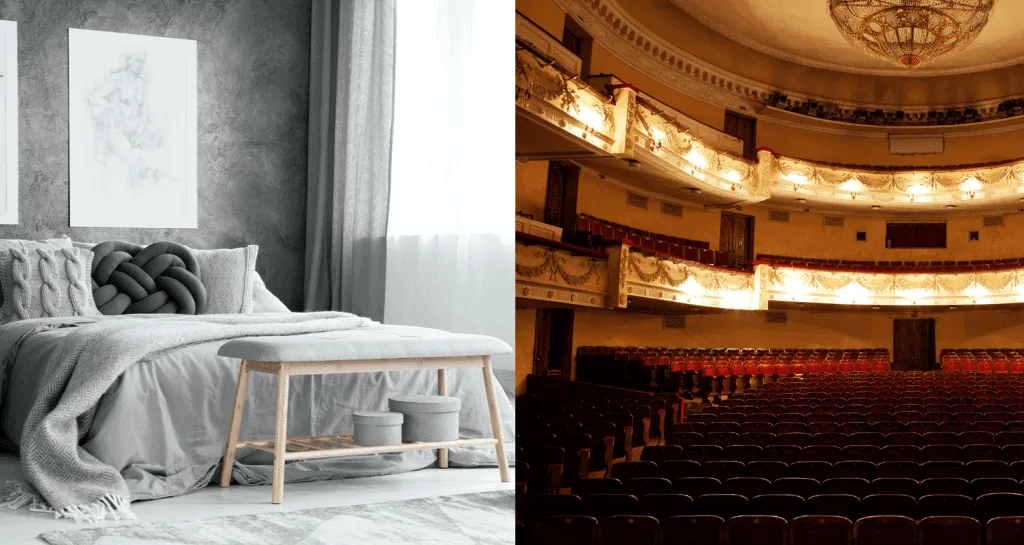
This RT60 calculator estimates how long sound takes to decay by 60 dB in a room, band by band, from the room's dimensions and the materials on its surfaces. Enter length, width and height in metres or feet, assign a real material to each of the six surfaces from the built-in absorption library, add doors, windows and other openings, and the calculator returns reverberation time per octave band against the target range for the room type you select.
Two features make it usable for design rather than just checking: an A/B mode holds two schemes side by side so a material change can be compared directly, and the result can be printed as a report. The interface is available in English and Indonesian, and the site language switcher drives it.
How the RT60 Calculation Works
Reverberation time is governed by how much sound energy the room absorbs on each reflection relative to how much air it has to fill. The Sabine equation states it directly:
RT60 = 0.161 V / A
where V is room volume in cubic metres and A is total absorption in metric sabins — each surface area multiplied by its absorption coefficient at that frequency, summed across every surface, opening and object in the room. Because absorption coefficients vary strongly with frequency, the calculation has to be run per band, which is exactly what this RT60 calculator does.
That frequency dependence is the whole point. A room finished in thin fabric and carpet absorbs well at 2 kHz and barely at all at 125 Hz, so its reverberation time can sit perfectly on target at speech frequencies while running a second longer in the bass. A single averaged number hides that; a per-band result exposes it.
Sabine or Eyring: Which Formula to Use
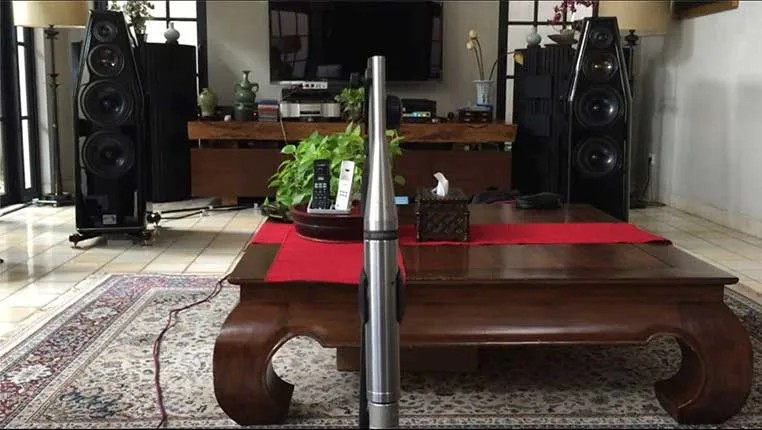
The calculator offers both Sabine and Eyring, and the choice matters more than it looks. Sabine assumes a lightly absorbent, diffuse room; it is accurate when average absorption is low and increasingly optimistic — predicting longer decay than reality — as a room gets more absorbent.
Eyring replaces Sabine's linear absorption term with a logarithmic one and stays realistic in heavily treated spaces. As a working rule, use Sabine for ordinary rooms with average absorption below roughly 0.2, and switch to Eyring for studios, control rooms and vocal booths where the average coefficient is high. Run both when the room sits near the boundary: if the two disagree materially, the room is absorbent enough that Eyring is the one to trust.
Both formulas share the same assumption of a diffuse field with sound arriving from all directions equally. Neither is valid in a room where absorption is concentrated on one surface, and neither describes a coupled volume such as a hall opening into a stage house.
RT60 Targets by Room Type
There is no universally good reverberation time — only a time appropriate to what the room is for, and to its volume. Speech needs a short decay so that consonants are not masked by the syllable before them; music needs a longer one for the ensemble to blend and the room to add support.
The target bands built into the calculator reflect that split: roughly 0.4–0.6 s for meeting rooms and classrooms, 0.6–0.8 s for lecture theatres and auditoria used mainly for speech, 1.0–1.4 s for multi-purpose halls, and up to about 2.0 s for concert halls and worship spaces designed around unamplified music. Critical listening and control rooms sit lower again, near 0.2–0.3 s and, crucially, flat across frequency.
Larger rooms tolerate — and need — longer decay than small rooms with the same purpose, which is why every target here is a band rather than a number. The room-type breakdown covers this in more detail.
A Worked RT60 Example
Take a 10 × 8 × 3 m meeting room: 240 m³ of volume and 268 m² of surface. Finished hard — painted plaster walls and ceiling, vinyl floor, average absorption around 0.05 at 500 Hz — total absorption is roughly 13 sabins, and Sabine gives RT60 = 0.161 × 240 / 13 ≈ 3.0 s. That is a room in which a meeting is genuinely hard to follow.
Now change two surfaces. A Class A mineral-fibre ceiling tile across the full 80 m² plus carpet on the floor raises total absorption at 500 Hz to roughly 90 sabins, and RT60 falls to about 0.43 s — inside the target band, with the ceiling doing most of the work. Nothing was added to the walls at all.
The instructive part is what happens at 125 Hz, where both those finishes are far less absorbent: absorption drops to roughly 30 sabins and low-frequency RT60 stays near 1.3 s. The room now sounds clear but boomy, and the fix is a bass-capable element — a plenum behind the ceiling, a membrane absorber, or heavy curtains hung with an air gap — not more of the same tile.
Where an RT60 Calculator Stops
Every statistical RT60 calculator, this one included, assumes a diffuse field in a reasonably proportioned room with absorption spread over its surfaces. It cannot describe strong discrete echoes from a distant hard wall, flutter between two parallel reflectors, focusing from a curved surface, or the modal behaviour that dominates below the Schroeder frequency — the region the room mode calculator covers instead.
Published absorption coefficients also carry real uncertainty. They come from laboratory tests on a specific mounting depth and sample size, and the same material fixed directly to a wall behaves differently from one spaced 100 mm off it. Furniture, occupancy and air absorption at high frequency all move the answer further.
Used as intended — to size the amount and type of absorption needed, and to see which band will fail first — this RT60 calculator is a reliable first pass. ALTA Integra takes it further with ray-tracing models, measured verification on site, and acoustic consulting across speech intelligibility and noise control. The underlying method is documented in this reference on the Sabine equation.
Related Rt60 Calculator Insights and Project Work
Further RT60 calculator material from ALTA Integra, related technical insights, and the built projects where this engineering was applied.
- Insight: Reverberation Time (RT60): The Sabine Equation, DIN 18041 Targets and Echo Control — The standard behind the target bands, and where echo control differs from reverberation control.
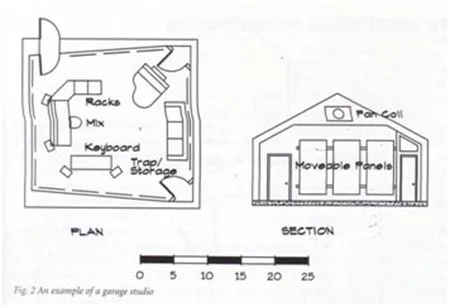 Insight: Controlling Reverberation and Echo: Measuring RT60 by Frequency Band, Not as an Average — Why a single averaged figure hides the band that actually fails.
- Insight: Acoustic Design for Meeting Rooms, Offices and Classrooms: RT60 Targets by Room Type — Target ranges for everyday rooms, and what happens when a room misses them.
- Insight: Music Studio Acoustic Design: Isolation, Treatment and RT60 Targets for Home and Commercial Rooms — Where Eyring replaces Sabine, and how flat decay is achieved rather than just short decay.
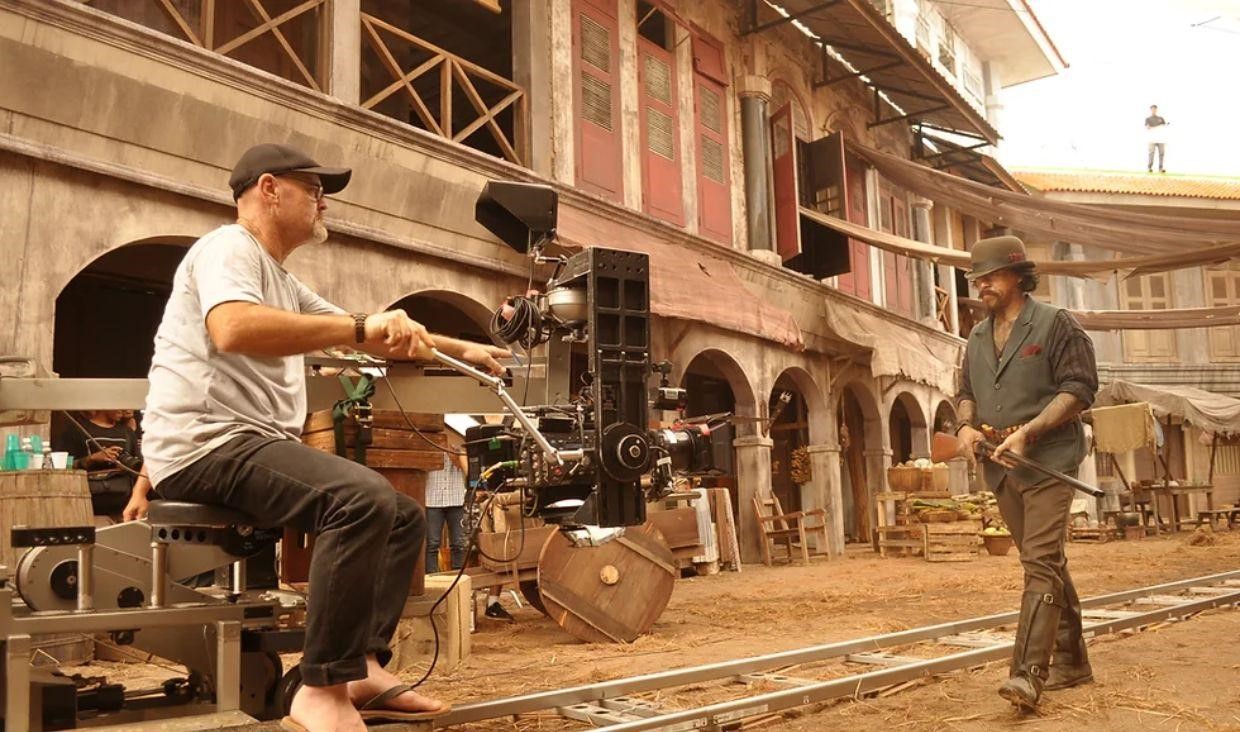 Project: Infinite Movie Studio Batam — Decay time and isolation designed together for production and post rooms.
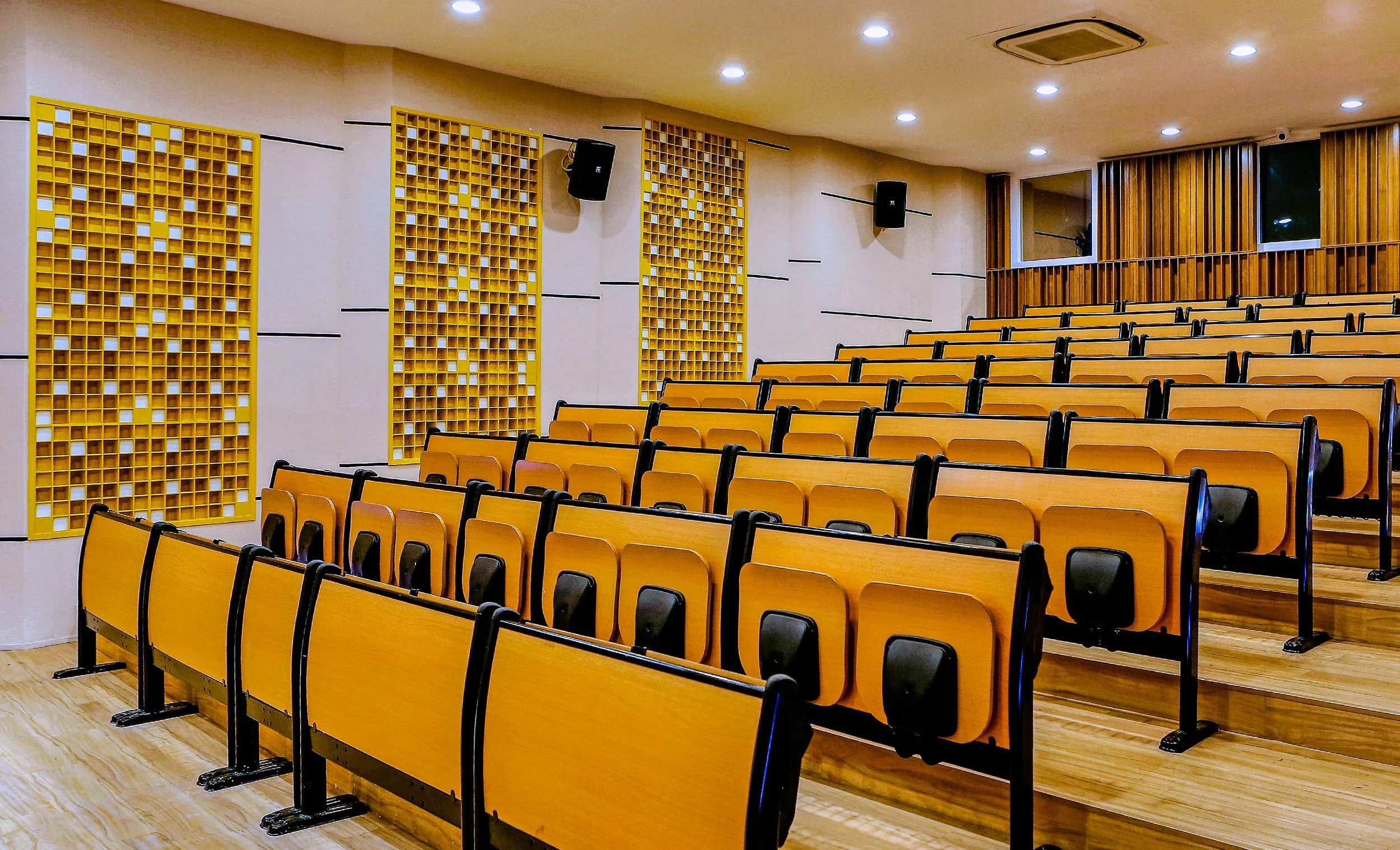 Project: Audiovisual Room Canisius College — A teaching room tuned for speech clarity rather than for music.
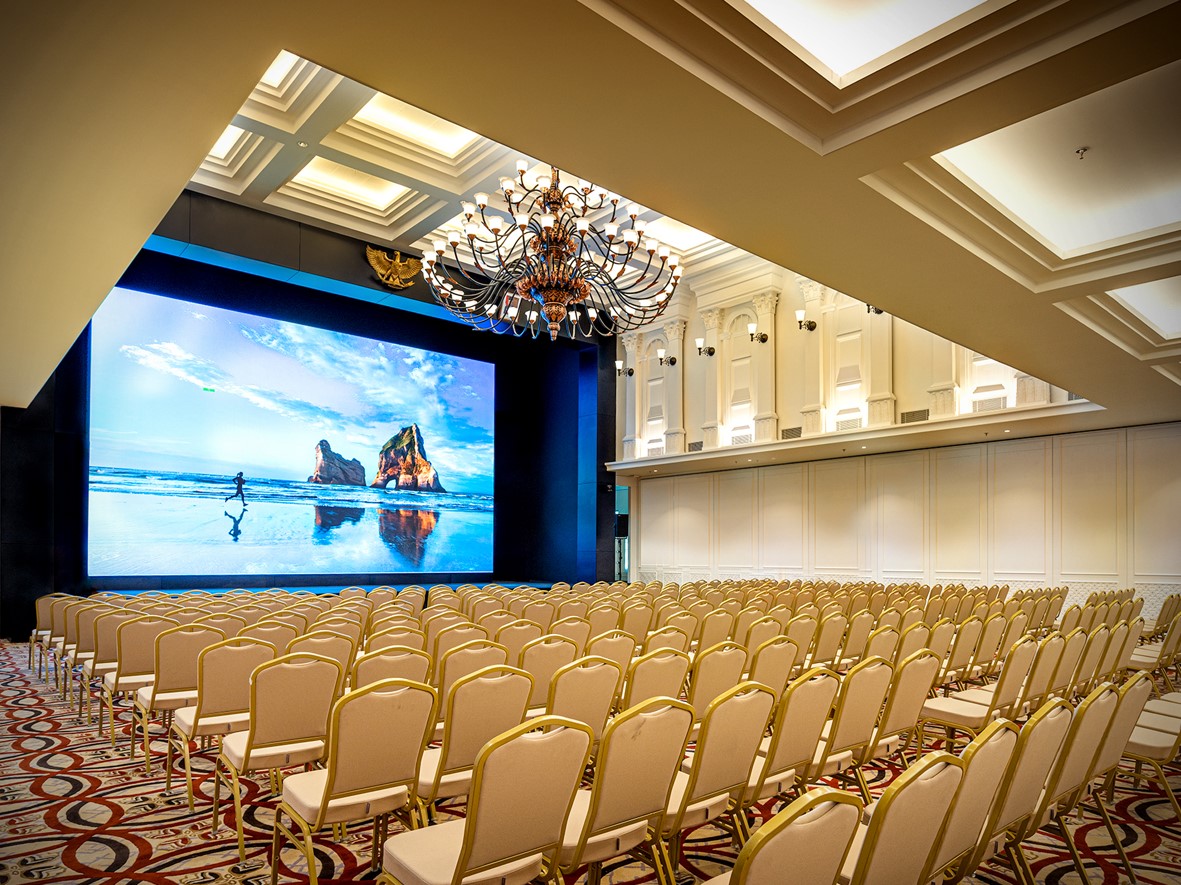 Project: Mandiri Plaza Hall — A multi-purpose hall balancing speech intelligibility against musical support.