Room Mode Calculator
Kalkulator room mode gratis: masukkan panjang, lebar, dan tinggi ruang untuk memetakan mode aksial, tangensial, dan oblik beserta distribusi tekanannya.
Table of Contents
Room Mode Calculator
This room mode calculator is free to use — no account, no password. It runs entirely in your browser; enter your name and email to reveal your result, and we can send you a copy.
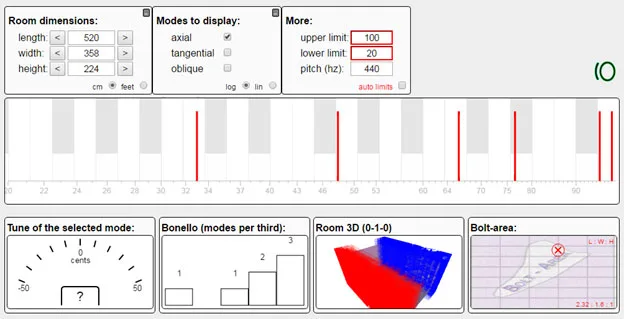
This room mode calculator answers the question that decides how a small room sounds before a single absorber is bought: at which low frequencies will the room itself resonate, and are those resonances spread evenly or bunched together? Enter the internal length, width and height in metres or feet, set an approximate RT60 and air temperature, and the calculator returns every axial, tangential and oblique mode, the spacing between them, the Schroeder frequency, and a pressure map for any mode you click.
Because room modes are set by dimensions alone, this is the earliest useful calculation in a small-room design — a listening room, control room, home theatre, karaoke room, podcast booth or meeting room. Get the proportions right and later treatment has an easier job; get them wrong and no amount of absorption fully recovers the loss.
How the Room Mode Calculation Works
The calculator solves the Rayleigh equation for a rigid-walled rectangular room. Every mode is one combination of three whole numbers — one per axis:
f = (c / 2) √[ (p/L)² + (q/W)² + (r/H)² ]
Here c is the speed of sound, L, W and H are the internal dimensions, and p, q and r are the mode orders along each axis. Because c varies with temperature (about 0.6 m/s per °C), the temperature field shifts every predicted frequency slightly — which is why the calculator shows the speed of sound it is actually using.
Each mode falls into one of three families, and the room mode calculator plots them at different strengths because they do not carry equal energy:
- Axial modes — one non-zero order, a wave bouncing between one opposing pair of surfaces. The strongest family, plotted at 0 dB.
- Tangential modes — two non-zero orders, involving four surfaces. Roughly 3 dB weaker.
- Oblique modes — three non-zero orders, involving all six surfaces. Roughly 6 dB weaker.
The lowest axial mode is the room's floor: below it, the room cannot support a standing wave at all and low-frequency output collapses regardless of the loudspeaker. A 3.0 m dimension puts that limit near 57 Hz.
Reading the Modal Spectrum
The spectrum view puts every resonance on one linear frequency axis. What matters is not the individual peaks but their distribution: evenly spaced modes sum into something close to a smooth low-frequency response, while two modes within a few hertz of each other stack into an audible boom, and a wide gap leaves a note that the room simply will not sustain.
The Schroeder frequency marks the crossover between the two behaviours. Below it the room is modal and these discrete peaks and nulls dominate what a listener hears; above it the modes overlap into a statistically diffuse field where reverberation time, not modal spacing, is the useful description. It falls with volume and rises with RT60, so a small, live room stays modal much further up the spectrum than a large, well-damped one.
Two numbers in the summary are worth watching. The largest axial gap flags the frequency the room will under-reproduce, and coincident modes — two or more resonances at the same frequency — flag the ones it will exaggerate.
Pressure Maps and Where to Put the Subwoofer
Clicking any mode maps its pressure across the room. The high-pressure zones are where that frequency is loudest, where absorption placed on a boundary does the most work, and where a subwoofer will excite the mode hardest. The pale bands between them are nulls, where the same frequency largely disappears.
That single picture explains most unexplained low-frequency complaints in small rooms. A subwoofer sitting in a corner is in a pressure maximum for every mode at once, which is why corner placement produces the most output and the least even response. A listening position halfway along a dimension sits in the null of that axis's first mode, which is why a bass note can vanish in one seat and dominate the next.
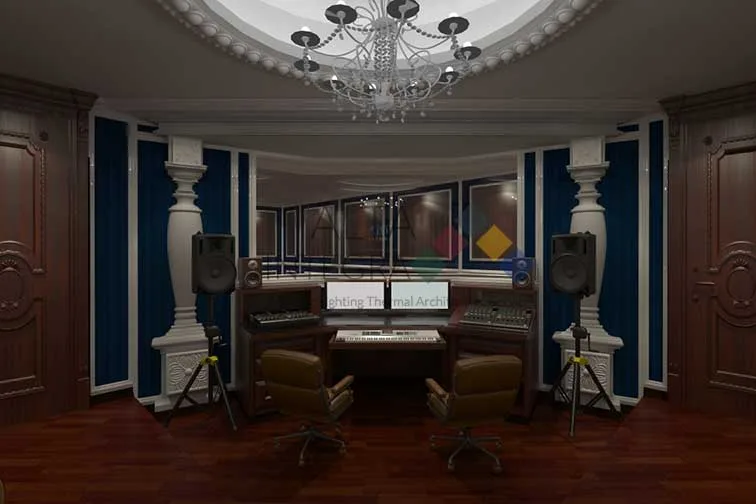
The practical loop is short: identify the problem mode in the table, look at its pressure map, then move the source or the listener out of its extremes before reaching for treatment. ALTA Integra runs exactly this sequence in acoustic consulting work on studios and critical listening rooms.
Room Ratios, Mode Spacing and the Bonello Criterion
Because modes come from dimensions, the ratio between length, width and height decides the distribution. Cubes and rooms with dimensions in simple whole-number ratios are the worst case: modes from different axes land on top of each other and reinforce a handful of frequencies while leaving gaps elsewhere. The calculator's ratio verdict flags this, and its fit-a-ratio helper re-proportions the plan onto a published ratio while keeping the ceiling height you already have.
The Bonello criterion is the more complete test, and the calculator applies it directly: count the modes in each third-octave band, and the distribution is acceptable when every band holds at least as many modes as the band below it, with no coincident modes in the same band. It is a stricter and more honest check than a ratio lookup because it evaluates the room you actually have rather than how close it sits to a recommended shape.
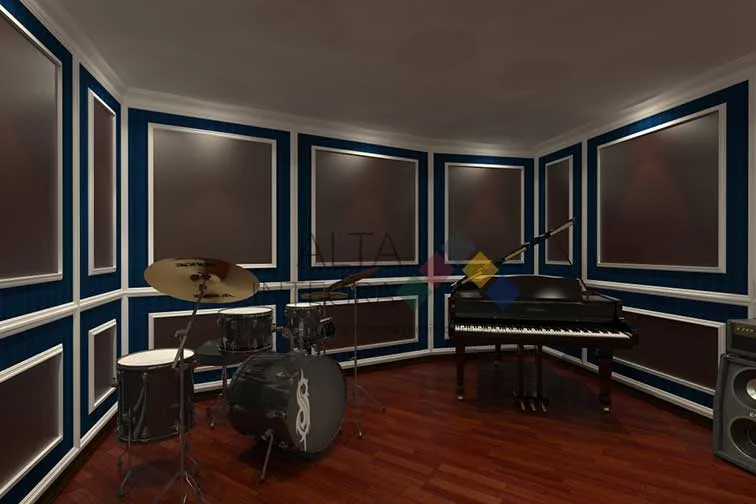
Where the ratio is genuinely fixed — an existing shell, a structural grid, a fit-out inside a slab-to-slab height — the usable levers are splayed or non-parallel surfaces, membrane and Helmholtz absorbers tuned to the worst modes, and source and listener positions chosen against the pressure maps rather than by symmetry.
Where a Room Mode Calculator Stops
This room mode calculator assumes a rectangular room with rigid, perfectly reflective boundaries. Real rooms deviate in ways that matter: a lightweight partition or a large window loads and detunes the modes it bounds, an open doorway couples two volumes into one shared modal set, and a non-rectangular plan or a sloped ceiling produces modes the closed-form equation cannot describe at all.
It also predicts frequencies, not levels. How audible any given mode is depends on its damping, on where the source and listener sit, and on how much low-frequency energy the programme material actually contains — which is why measurement remains the arbiter. Room modes are one part of a wider picture that also includes reverberation time, early reflections and background noise.
What the method is genuinely good for is settling proportions and low-frequency strategy while the room is still a drawing, when a dimension can still be changed for free. ALTA Integra uses this check at concept stage and then replaces it with measured room response and full modelling before a room is signed off. The underlying theory is summarised in this reference on room modes and standing waves.
Related Room Mode Calculator Insights and Project Work
Further room mode calculator material from ALTA Integra, related technical insights, and the built projects where this engineering was applied.
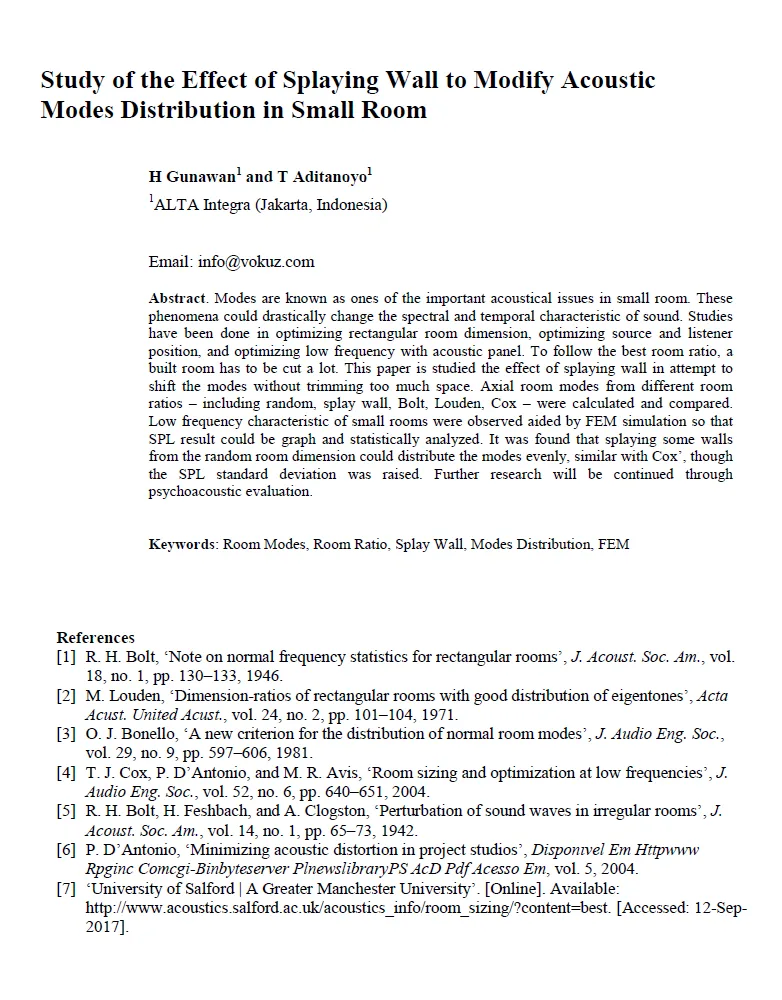 Insight: Splaying Walls and Room Mode Distribution: ALTA Integra's RECAV 2017 Research — Whether angling a wall genuinely improves modal distribution, tested rather than assumed.
 Insight: Room Resonance and Frequency Response: Why Dimensions Decide How a Room Sounds — The same resonances this calculator predicts, traced through to the response a listener hears.
 Insight: High-End Audio Room Acoustic Design: Room Modes, Reflection Points and Why Ratio Beats Treatment — Why proportion decides more of the result than absorber count in a critical listening room.
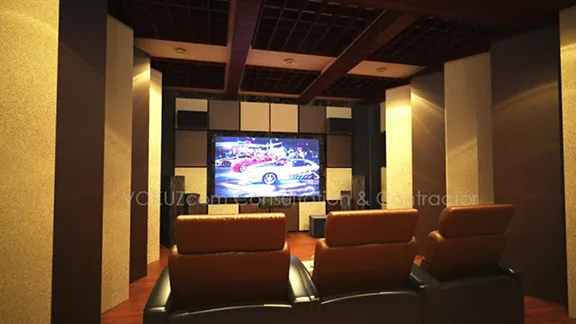
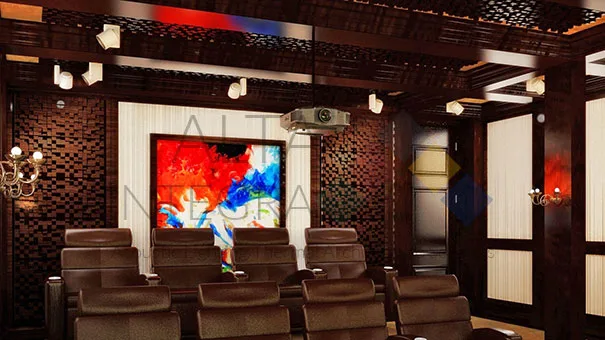 Insight: Home Theatre Acoustic Design: Room Modes, Reflections and the Four Disciplines — Modal control in a room that also has to satisfy picture, seating and isolation constraints.
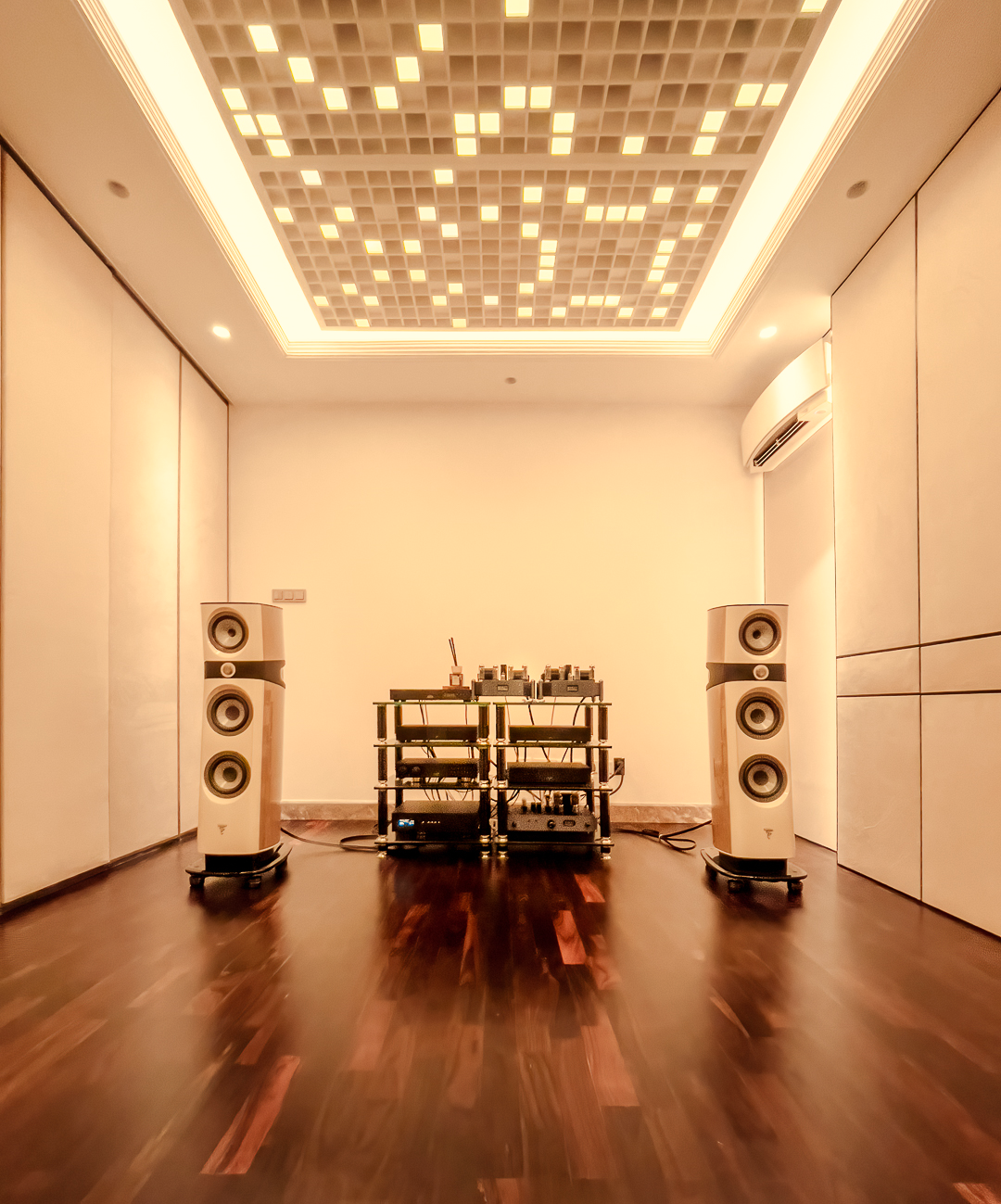 Project: Sindanglaya Audiophile Room — A dedicated listening room proportioned and treated around its own modal behaviour.
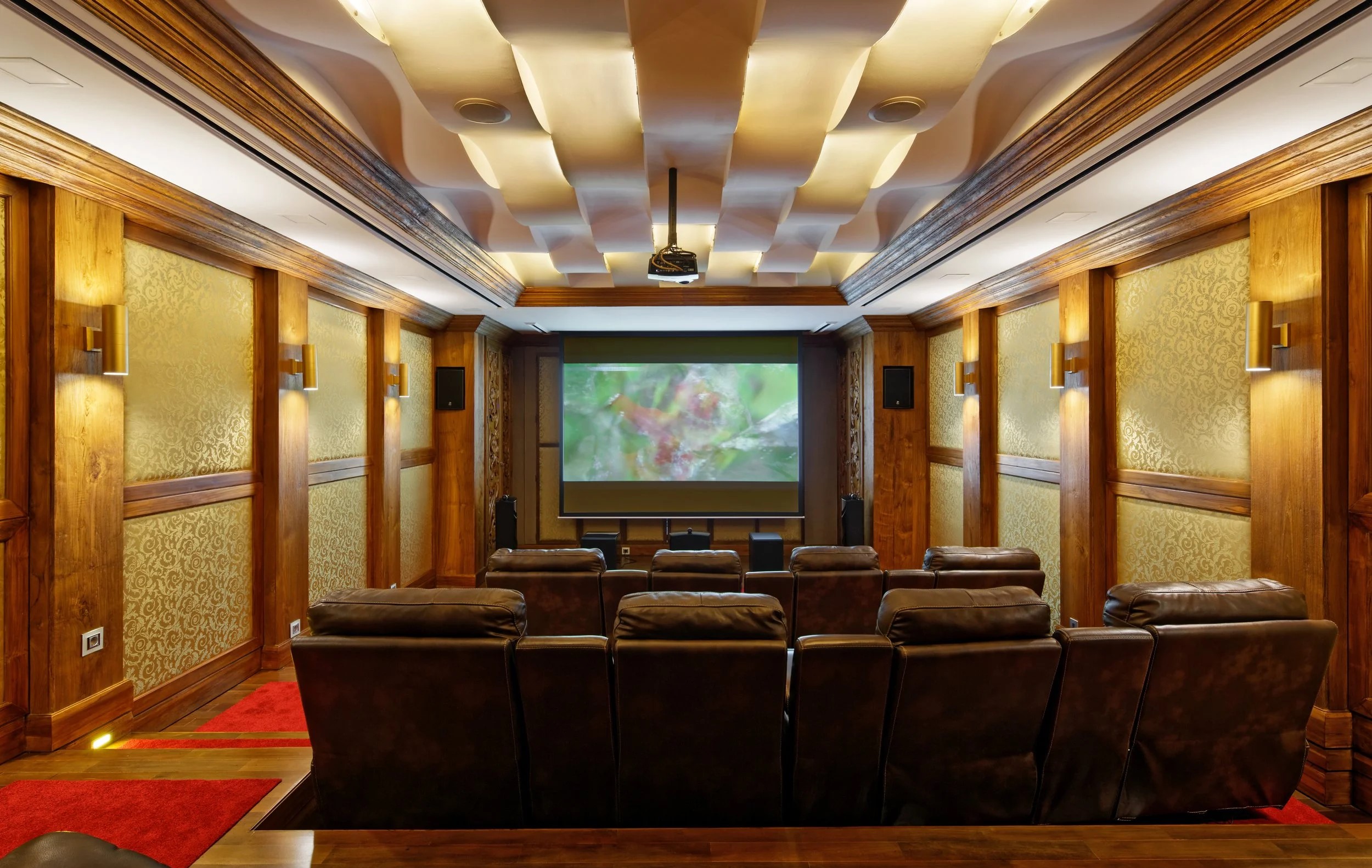 Project: Diamond Home Theater — Low-frequency control in a private cinema where the shell dimensions were fixed.
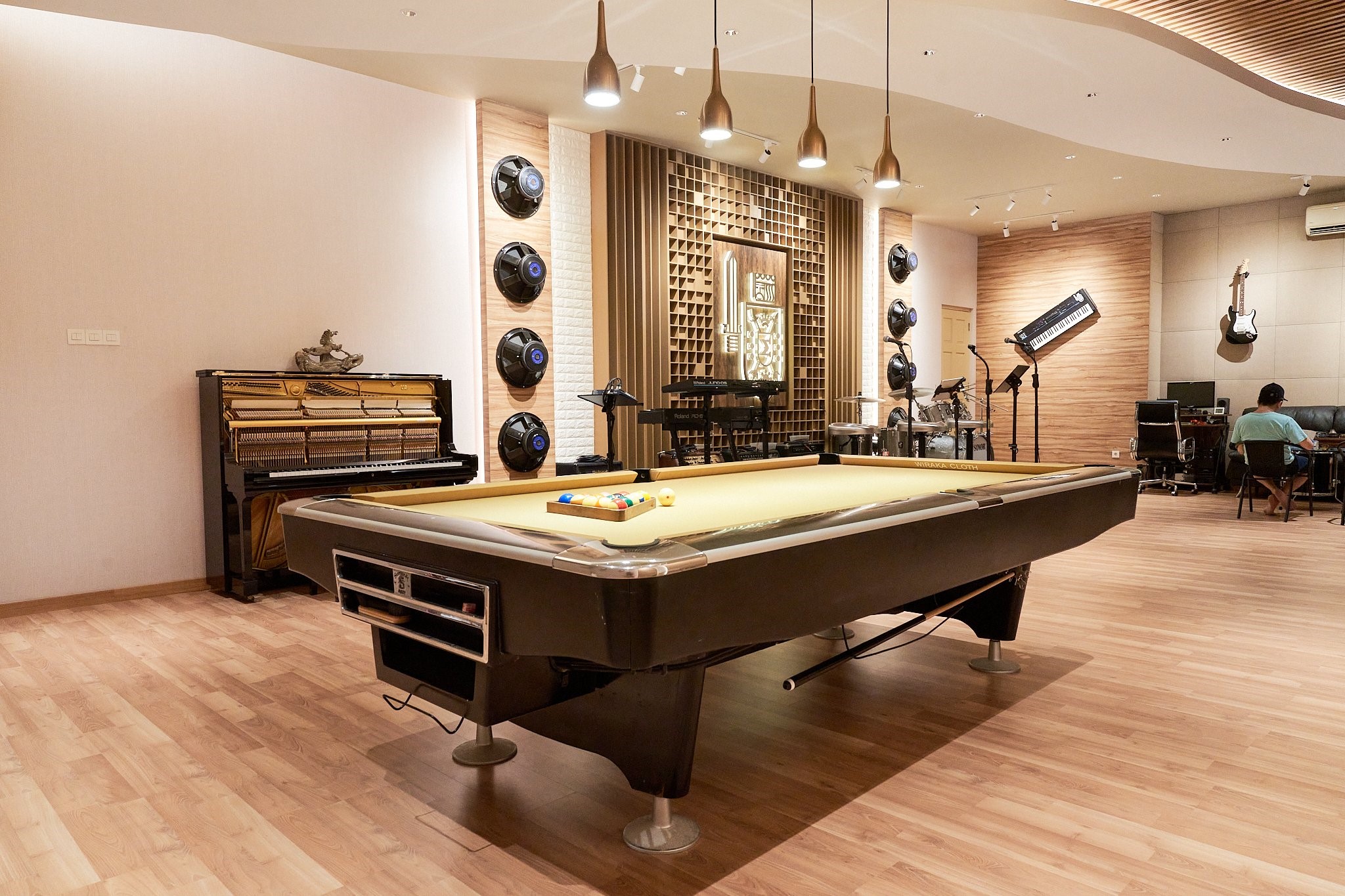 Project: Mancave Music Billiard Game Studio — A multi-use room where music, speech and play each place different demands on the low end.