Green Building Design with Renewable Energy
ALTA Integra, a green building consultant, on the core principles of green building design with renewable energy and how they reduce environmental impact today.
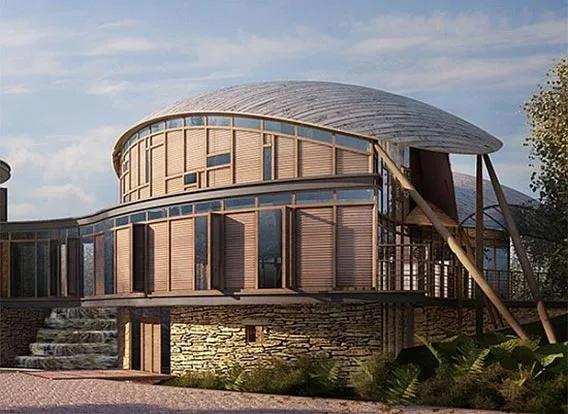
As a green building consultant, ALTA Integra treats sustainable energy design as an approach to designing buildings around environmentally friendly, renewable energy sources that replenish naturally and place little strain on natural resources. It emerged as a response to the growing constraints on conventional energy supply, with the goal of reducing a building's environmental impact while keeping it in harmony with the natural systems around it.
Core Principles of Sustainable Energy Design
At its foundation, sustainable energy design asks a building to do more than simply function. It asks the building to minimize harm across its materials, its systems, and its full lifecycle, while still meeting the comfort, aesthetic, and cost expectations of its occupants and owners.
Material Selection Principles
This approach favors non-toxic materials produced through environmentally responsible processes, chosen for durability and energy efficiency rather than lowest first cost. Materials of good quality and high durability reduce the frequency of maintenance and replacement over a building's life. Product choices should also account for what happens after a material's useful life ends, with genuine consideration of reuse and recycling, and materials should never be harmful to occupants or to the surrounding environment.
Wood is often seen as reinforcing a "go green" image, and it can be a legitimate sustainable material choice. But its use should be limited and sourced carefully, since timber harvesting itself can cause environmental damage through deforestation. Wherever practical, recycled materials should be prioritized over virgin material.
The Working Cycle, Step by Step
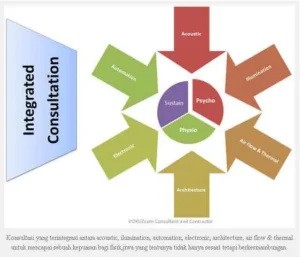
It is, at its core, a search for balance between environmental performance, occupant comfort, aesthetics, and cost. The scope of that work typically spans natural lighting and daylighting, indoor air quality, natural ventilation, energy efficiency, minimization of construction waste, water conservation, solid waste management, renewable energy integration, natural landscape design, and land preservation.
Benefits Across Three Categories
| Category | Benefits |
|---|---|
| Environmental | Protecting the ecosystem, reducing emissions, improving air and water quality, conserving water, reducing waste, preserving natural resources, moderating internal temperatures |
| Economic | Reducing operational costs, optimizing the full lifecycle of the building, increasing property value, increasing occupant productivity, reducing maintenance costs |
| Social | Increasing occupant comfort, improving occupant morale, increasing productivity, creating a more enjoyable environment |
Sustainable energy design's benefits compound across all three categories, each one reinforcing the others.
Four Renewable Energy Sources Commonly Integrated in Green Buildings
Sustainable energy design draws on several well-established renewable energy sources, chosen based on a site's climate, orientation, and available space. Solar energy: photovoltaic panels for electricity generation, or solar thermal systems for water heating, both well suited to Indonesia's high year-round solar exposure. Wind energy is generated using small-scale wind turbines.
This option is more commonly applied where a site has consistent, favorable wind conditions. Geothermal energy (ground-source systems that use stable underground temperatures) reduces the energy load of heating and cooling.
Biomass and waste-to-energy systems convert organic or construction waste streams into usable energy. This applies where volume and infrastructure justify it.
Choosing among these four sources is a site-specific engineering decision made project by project. The right combination depends on climate, budget, and the building's actual energy demand profile.
How Sustainable Energy Design Aligns With Recognized Standards
In Indonesia, sustainable energy design principles are reinforced by recognized standards and certification schemes, including SNI 03-6572-2001 and SNI 14-1993-03 (Indonesia's ventilation, air-conditioning, and thermal-comfort design standards, with a comfort band of roughly 20.8-27.1°C effective temperature), alongside certification schemes such as Greenship (GBCI), EDGE, and BGH (Bangunan Gedung Hijau). Designing toward these principles from the outset makes alignment with standards and certifications considerably more straightforward than retrofitting for them later, through ALTA Integra's green building advisory and certification practice.
FAQ
What does sustainable energy design actually mean in practice?
It means designing a building's materials, systems, and energy sources around minimizing environmental harm, favoring renewable energy, efficient materials, and resource-conscious systems from the earliest concept decisions.
Is using wood as a building material considered "green"?
It can be, but it is not automatically green. Its environmental benefit depends on responsible sourcing, since harvesting timber can itself cause deforestation and environmental damage.
What is the full scope of a sustainable energy design project?
It typically spans daylighting, indoor air quality, natural ventilation, energy efficiency, waste minimization, water conservation, renewable energy, landscape design, and land preservation, treated as one integrated system across the project.
Do green building measures actually reduce costs, or only environmental impact?
Both: properly designed green buildings typically show reduced operational and maintenance costs alongside their environmental benefits, on top of social benefits like occupant comfort and productivity.
Which renewable energy sources are most common in Indonesian green buildings?
Solar energy is the most broadly applicable given Indonesia's year-round solar exposure, followed by geothermal and biomass systems where site conditions justify them. Small-scale wind is used less often due to less consistent site-level wind conditions.
For more information about our sustainable design consulting services, please contact us at:
ALTA Integra
Indonesia Stock Exchange Building, Tower 1, Level 3 Unit 304
SCBD Senayan, Kebayoran Baru, South Jakarta, DKI Jakarta 12190
Tel: +62 818 826 036
Email: customer@altaintegra.com