Karaoke Room Design: Why Singers Need to Hear Themselves, and What Stops Them
A singer who cannot hear themselves against the backing track pushes harder, and everything downstream gets worse.
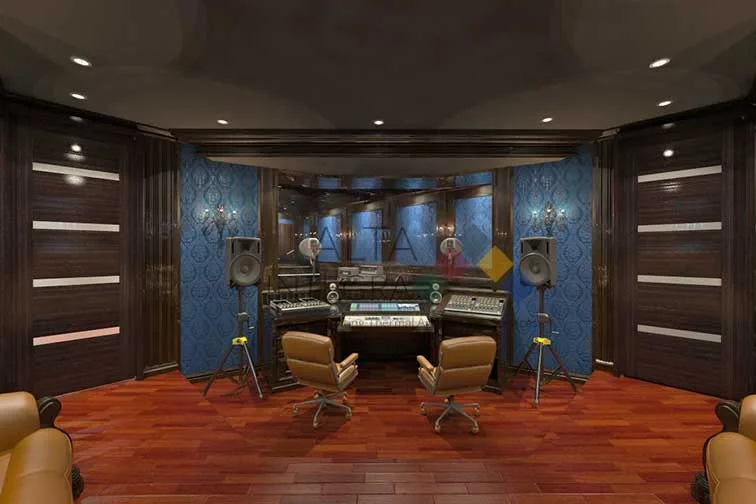
Karaoke room design succeeds or fails on one thing a singer notices immediately: whether they can hear themselves clearly against the backing track. A singer who cannot pushes harder, strains, and the room's problems compound.
Flutter echo, boomy bass buildup and harsh reflections off bare walls and glass all get louder along with the voice. Everything else in a karaoke room, from lighting to seating, is downstream of that.
The reason so many home and commercial rooms fall short is structural: acoustics, lighting, interior and AV are bought from four vendors who never speak to each other, in a small room where all four compete for the same surfaces.
The Four Disciplines and Where They Collide
| Discipline | Key decisions | Collides with |
|---|---|---|
| Acoustics | Room ratio, absorptive and diffusive material balance, panel sizing and placement, soundproofing between rooms | Wall and ceiling area wanted by lighting and interior |
| Lighting | Balance between screen brightness, room light and ambience | Ceiling positions wanted by acoustic treatment, screen legibility |
| Interior | Theme, colour, decor, furniture | Surfaces and materials the acoustic design specified |
| Audio-video | Speaker and subwoofer position, screen placement, projection distance | Seating layout and sightlines |
In a room this small the third column is not theoretical. Every discipline's preferred solution sits on surfaces another one has already claimed.
Why Acoustics Comes First
Room acoustics is the foundation because it determines whether the singer gets useful feedback. When a karaoke room sounds structured and controlled, the performer hears themselves clearly against the track and sings with more confidence: confident singing is the product the room exists to sell.
It starts with room ratio: the relationship between length, width and height, which determines how sound energy distributes across frequencies and whether bass piles up at particular notes. That is a decision made on a drawing and effectively unavailable afterwards, for the reasons set out in our article on room resonance. From there it is the right balance of absorptive and diffusive material, panels sized and placed for the room's actual dimensions rather than bought by area, and a realistic prediction of soundproofing needs: in a commercial venue with rooms side by side, that is the difference between two functioning rooms and two rooms leaking into each other.
Lighting: Three Levels That Have to Balance
Lighting has to keep the room energetic without making the room unusable. Practically that means three levels in balance: screen brightness high enough that lyrics stay legible, room lighting low enough not to wash the screen out, and ambience lighting setting mood without competing for visual attention.
Getting that ratio wrong is the most common reason a karaoke room feels either clinical or too dim to sing in. It is a ratio, which is why it cannot be resolved by adjusting one at a time after installation.
Layout: Seating, Screen and Speakers
The third element is geometry. Seating facing the screen at an awkward angle, a subwoofer positioned where it produces uneven bass around the room, or a screen catching glare from ambient lighting: any one of these undoes otherwise sound acoustic and lighting work.
Subwoofer placement deserves particular attention because the convenient position is usually the worst one. A corner loads the subwoofer against two or three room boundaries and exaggerates exactly the bass buildup the acoustic design was working to control.
Why Integration Is the Whole Method
Designing all four disciplines together produces a room that accounts for acoustics, lighting and available AV equipment as one system, and it avoids the rework that follows from a first design that ignored the interactions. In a room of this size, sequencing the four means whichever comes last inherits the surfaces and positions the others left, which is rarely the set its own analysis called for.
The same principle applies to commercial venues, with the addition that soundproofing between adjoining rooms becomes a primary design constraint rather than a secondary one. ALTA Integra provides this through its acoustic engineering and design practice.
FAQ
What makes a karaoke room's acoustics good?
The right room ratio, a considered balance of absorptive and diffusive material, and panels sized and placed for the room's actual dimensions. The test is whether a singer can hear themselves clearly against the backing track. If they cannot, they push harder and every other problem worsens.
Why does lighting matter as much as sound in a karaoke room?
Because three levels have to balance: screen brightness for lyric legibility, room lighting low enough not to wash out the screen, and ambience for mood. It is a ratio rather than three independent settings, which is why it cannot be fixed by adjusting one at a time afterwards.
Where should a subwoofer go in a karaoke room?
Not in a corner, which is the convenient position and the worst one. A corner loads the subwoofer against two or three boundaries and exaggerates the bass buildup the acoustic design is working to control. Position should follow the room's modal analysis.
Can acoustics, lighting and AV really be designed together?
They have to be, in a room this small. All four disciplines compete for the same wall and ceiling surfaces, so sequencing them means whichever comes last inherits positions the others left, which is rarely the set its own analysis called for.
Is this different for commercial karaoke venues?
The same principles apply, with soundproofing between adjoining rooms becoming a primary design constraint rather than a secondary one. A commercial venue with rooms side by side either isolates them properly or has two rooms leaking into each other.
These four disciplines are what ALTA Integra applies on night entertainment venue fit-outs, where isolation performance is as commercially important as the room’s own sound.